Skip to the invitation
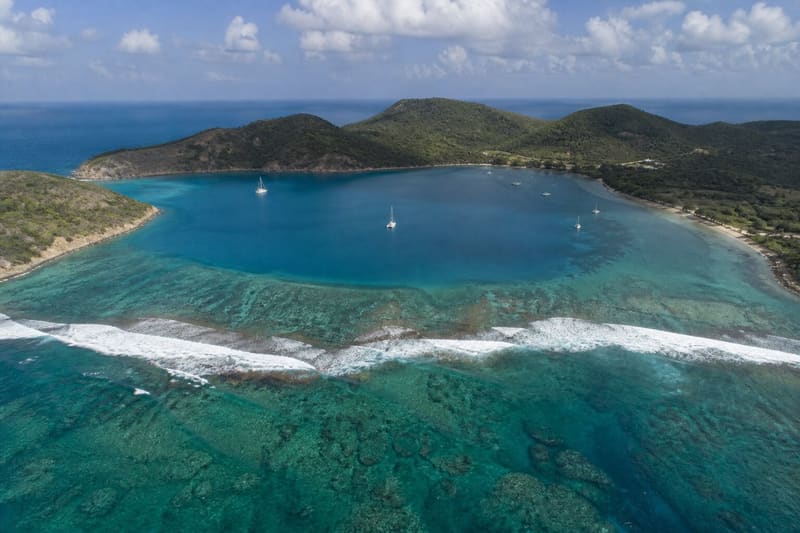
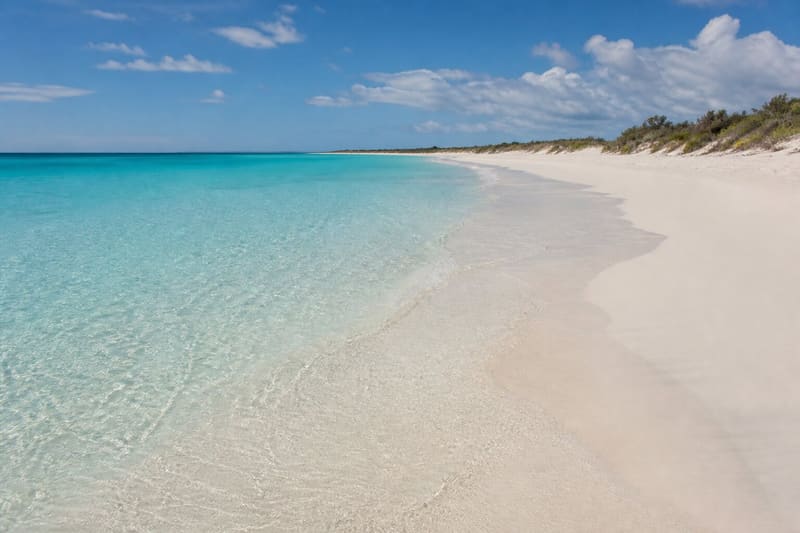
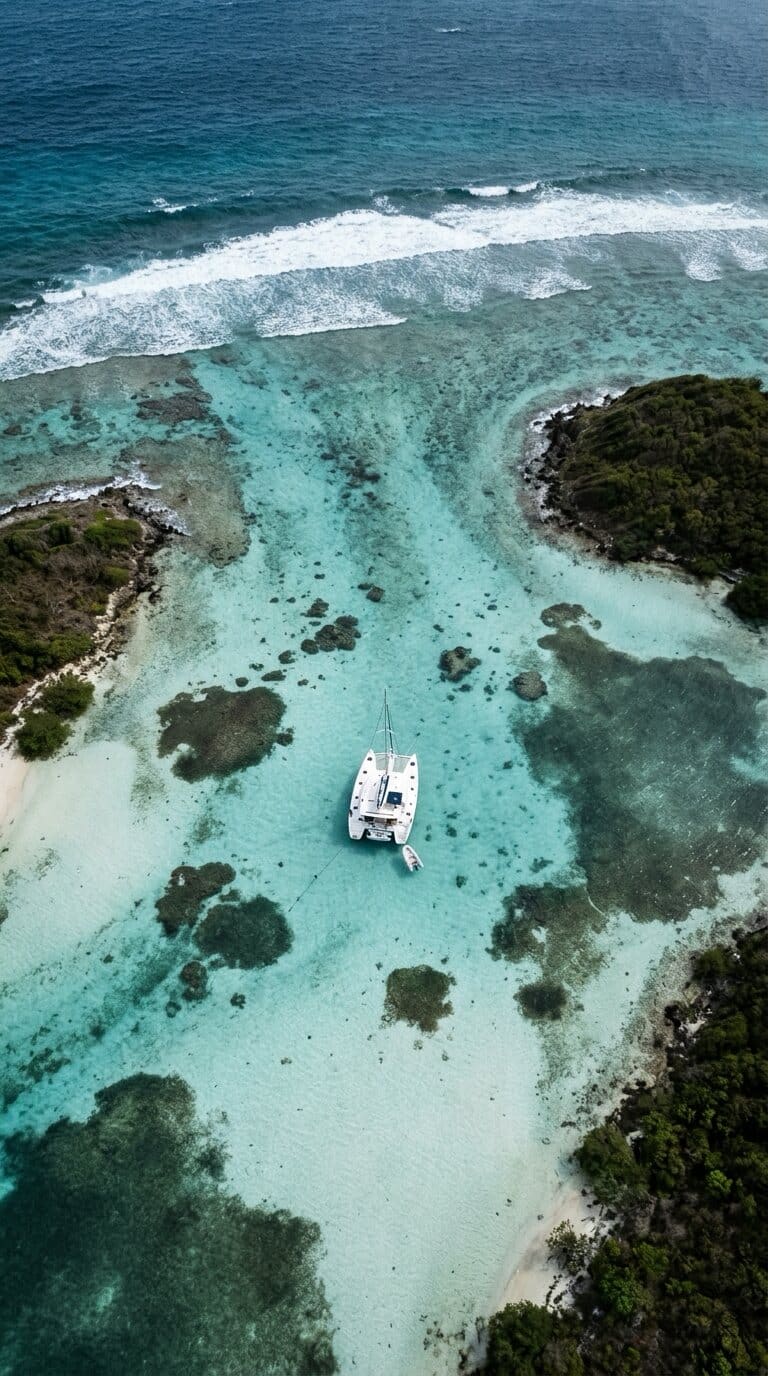
The same anchorage in the Tobago Cays, cropped tall for a phone: white sand, the reef line, open water beyond.

6 countries · 15 jurisdictions · 19 regions · 42 days

Six weeks down the Antilles.
Three cabins are open.

A Lagoon 43 in the eastern Caribbean · Le Marin, Martinique · 16 January to 27 February 2027 · skipper and cook aboard.

scroll

Three cabins are open, and I would rather fill them with people I like.

I have chartered a catamaran out of Le Marin, Martinique for six weeks this winter, hired a professional skipper and a cook, and spent a while planning a route that collects as much of the Caribbean as 42 days will physically allow. The boat has four double cabins. I am in one of them. The other three are free, and I am inviting people rather than advertising.

That is genuinely the whole pitch. If six weeks of Caribbean trade-wind sailing, fifteen countries, a different anchorage most nights and Carnival in Guadeloupe sounds like your kind of winter, read the rest and tell me. If you count countries or NomadMania regions, the route was built for you specifically. If you have never set foot on a boat, that is fine too — there is a skipper aboard and nothing is asked of you.

You do not have to take all six weeks. The trip splits into six Saturday-to-Saturday legs, each starting and finishing at an island with a proper airport, so you can come for one week, three, or the lot.

~1,100nautical miles
6Saturday changeovers
3cabins open
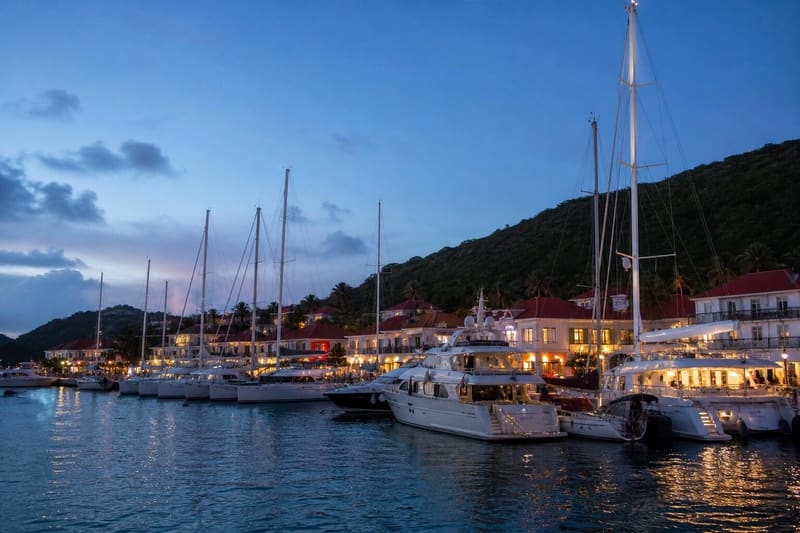
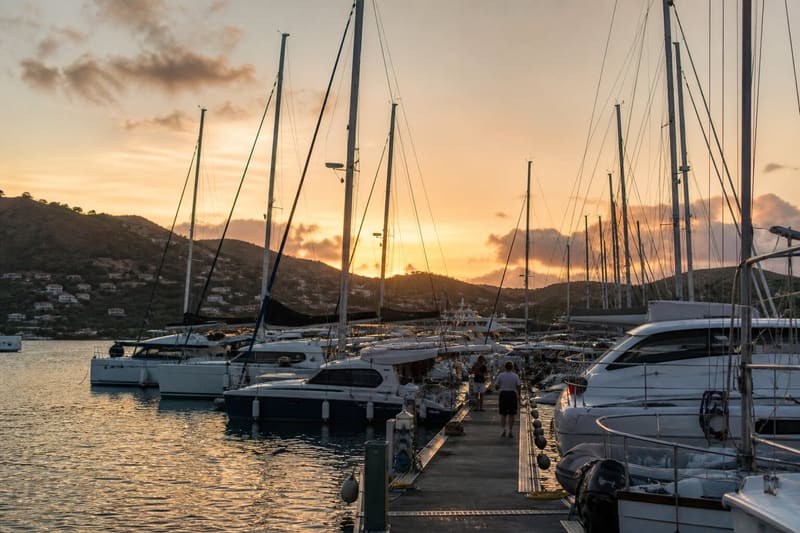
The marina at Le Marin, Martinique, in the evening: rows of moored catamarans, masts against a warm sky.

Le Marin, where the boat lives and where the first Saturday starts.

The route

Down the chain, and back up it

Martinique to Grenada, north to Anguilla, then 330 nautical miles home — about 1,100 nautical miles in all, mostly day hops, with one overnight. Tap an island for what we do there; tap a leg or a number to jump to that week.

Chart of the Lesser Antilles with the six weekly legs A drawn chart of the island chain from Grenada to Anguilla. The route runs south from Martinique to Grenada, back up the chain to Guadeloupe, Antigua and Sint Maarten, north to Anguilla, then 330 nautical miles offshore back to Martinique. Shelf water inside the 100-fathom line is shaded; depths beside the islands are in metres. 12°N 13°N 14°N 15°N 16°N 17°N 18°N 63°W 62°W 61°W 2 940 1 380 1 810 1 520 1 460 2 640 1 180 2 110 1 040 1 720 980 640 820 560 22 34 29 18 1 260 1 950 26 exclusion zone Saba pinnacles Charles L. Brown Champagne Reef Molinière · Bianca C Horseshoe Reef Réserve Cousteau Petit Piton wall Monkey Shoals Cades Reef HMS Proselyte Week 1 · Martinique → Grenada · ~200 nm Week 2 · Grenada → Martinique · ~230 nm Week 3 · Martinique → Guadeloupe · ~145 nm Week 4 · Guadeloupe → Antigua · ~110 nm Week 5 · Antigua → Sint Maarten · ~130 nm Week 6 · Sint Maarten → Martinique · ~400 nm FDF GND PTP ANU SXM 1 2 3 4 5 6 Martinique Saint Lucia St Vincent Bequia Mustique Canouan Tobago Cays Union Carriacou Grenada Dominica Les Saintes Marie-Galante La Désirade Guadeloupe Montserrat Antigua Barbuda Redonda Nevis St Kitts Statia Saba St Barth St Maarten Anguilla 050 nm N

Drawn for this page from published island positions and small-scale bathymetry, then simplified. Soundings in metres, dashed line is the 100-fathom contour. Not for navigation.

What is on the chart

  • the 100-fathom line — inside it the boat has a bottom to anchor on
  • soundings in metres: Saba and Statia sit on seamounts with deep water right up to the rock
  • the ten dive sites in the table further down

Between Antigua and Anguilla — the top of the chart, and four days of two-hour hops — there are nine separate jurisdictions in 78 nautical miles. Three countries own pieces of it, one island is split between two of them, and you can usually see the next border from the anchorage you are in.

Six weeks

Six weeks, and you can take one

Every week starts and ends on a Saturday in a place with an airport. Take one, take three, take all six. Swipe.

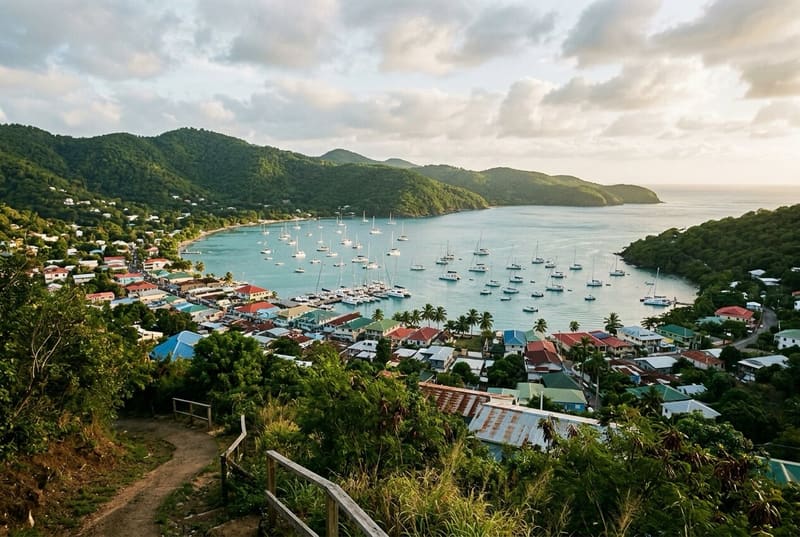
Admiralty Bay, Bequia, from the hill: yachts at anchor and the town along the shore.

Week 1 · Sat 16 → Sat 23 Jan · FDF → GND

Martinique to Grenada, down the Grenadines

Bequia, Mustique, Tobago Cays, Carriacou · ~200 nm · one night passage

Board at Le Marin on the Saturday evening, provision, and shake down along Martinique's west coast. Then an overnight passage south to Bequia — the one night sail of the trip and a good one: broad reach, warm, phosphorescence off the transom.

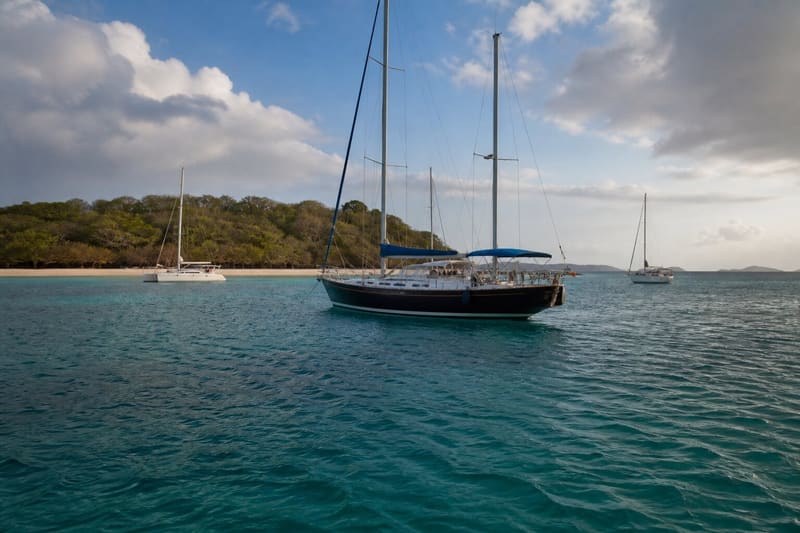
Admiralty Bay, Mustique, Canouan, then the Tobago Cays: a horseshoe reef with nothing behind it but open Atlantic, turtles on the inside, and the best snorkelling in the eastern Caribbean. Out through Mayreau and Union, then Carriacou and down to Grenada.

Best for — the classic Caribbean postcard week, and the only one with a night passage.
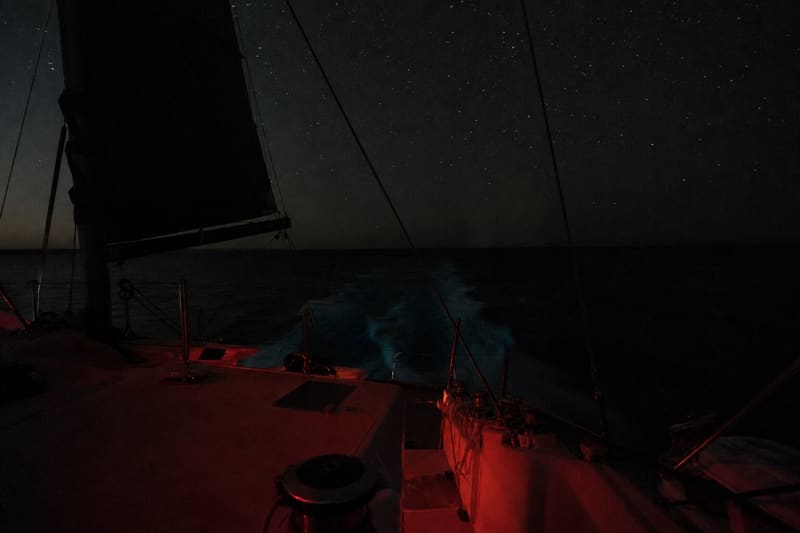
Night sailing: the deck in darkness, red instrument light, a sail against a sky thick with stars.
Two or three boats lying to anchor in turquoise water off a small green Grenadines island.
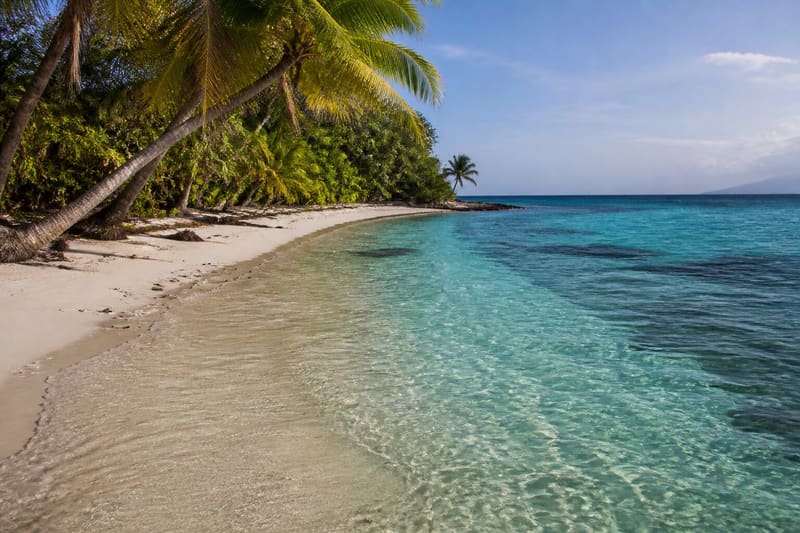
An empty curving white beach on an uninhabited Grenadines island, palms leaning over clear shallows.
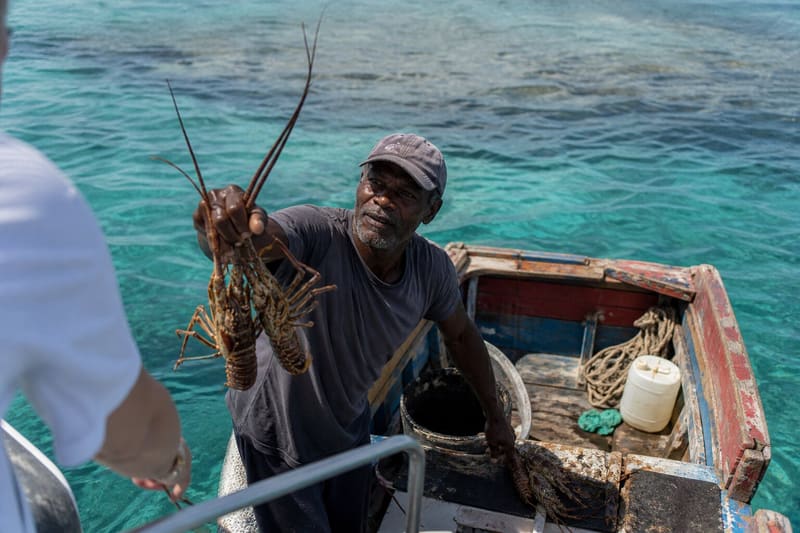
A fisherman alongside in a small open boat holding up lobsters to sell, the reef behind him.

🇲🇶 🇻🇨 🇬🇩 3 regions

€2,790 pp
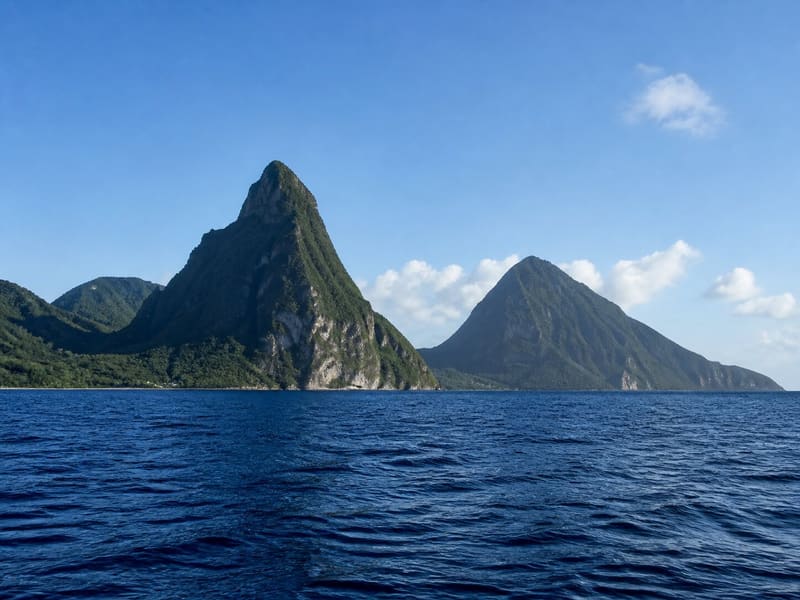
The two Pitons of Saint Lucia from the water off Soufrière on a clear morning.

Week 2 · Sat 23 → Sat 30 Jan · GND → FDF

Grenada back up to Martinique

Molinière, Chatham Bay, St Vincent, the Pitons · ~230 nm · upwind

Grenada first — the underwater sculpture park at Molinière, St George's, the south-coast anchorages — then we turn and work north. Chatham Bay on Union, back through the Grenadines by a different set of anchorages, then St Vincent itself, and St Lucia under the Pitons at Soufrière.

This is the one genuinely upwind week of the six, which makes it the best week to learn to actually sail rather than be a passenger.

Best for — sailing properly, and the Pitons. Note that St Lucia is the week that needs the visa.

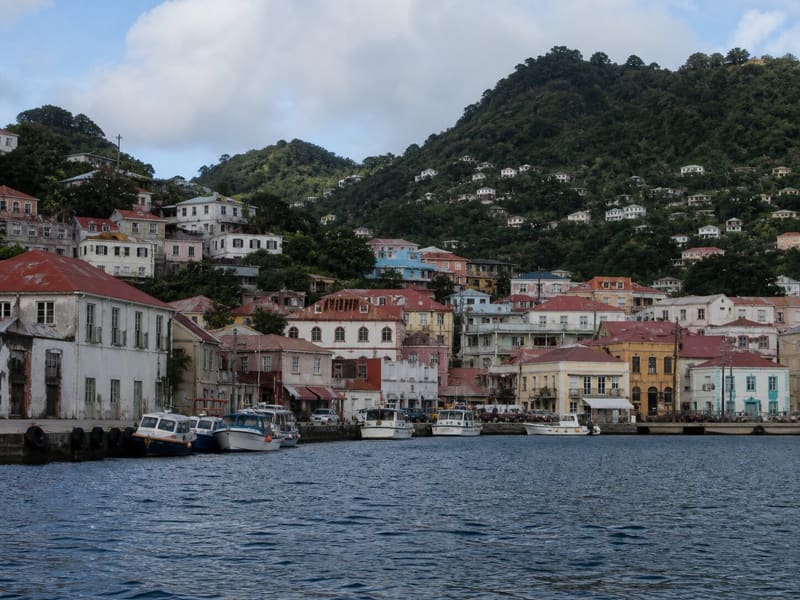
St George’s, Grenada, from the water: the Carenage lined with pastel buildings and red roofs up the hill.
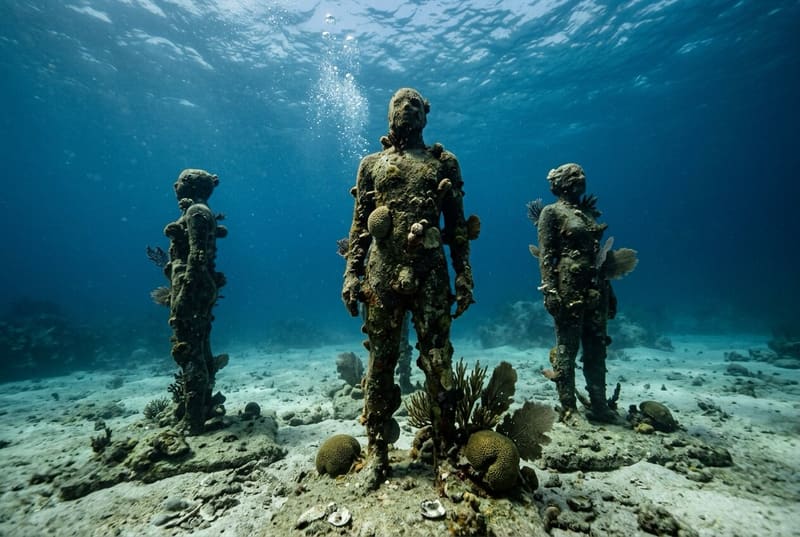
Concrete human figures standing on a shallow sandy seabed, encrusted with algae, divers’ bubbles above.
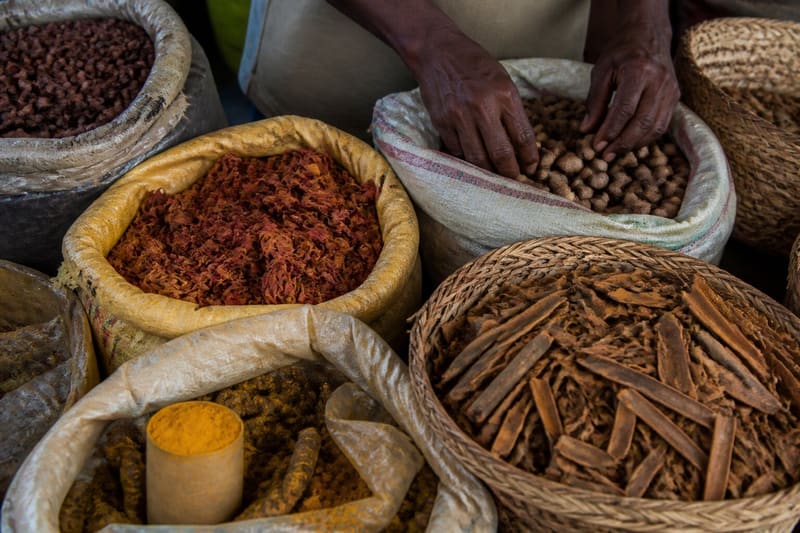
A Grenada market stall of nutmeg, mace, cinnamon bark and cocoa, a vendor’s hands sorting them.
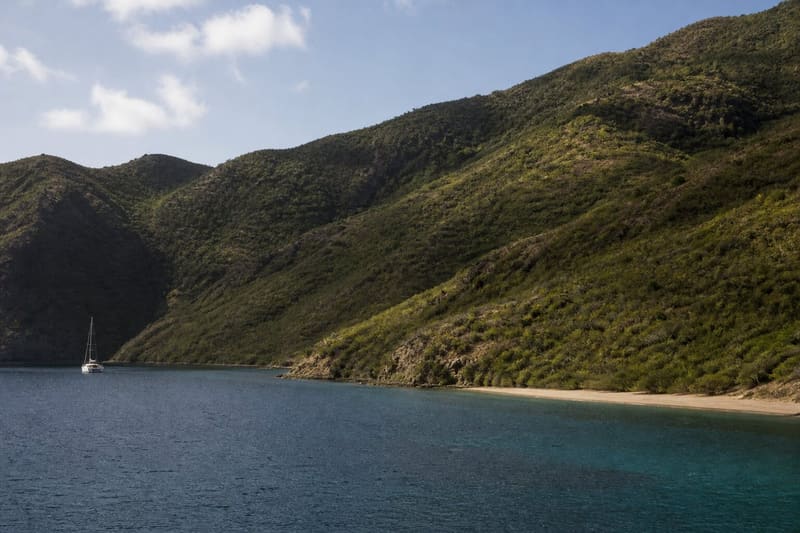
Chatham Bay on Union Island: an empty anchorage, steep green hills, no buildings.

🇬🇩 🇻🇨 🇱🇨 🇲🇶 3 regions

€2,390 pp
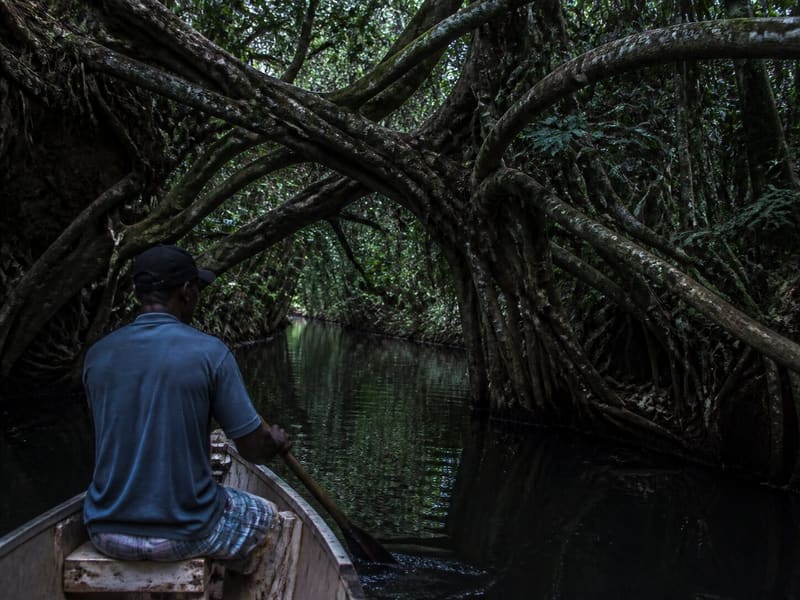
A boatman rowing up the Indian River in Dominica beneath overhanging swamp bloodwood roots.

Week 3 · Sat 30 Jan → Sat 6 Feb · FDF → PTP

Martinique to Guadeloupe, by Dominica

St Pierre, Indian River, Champagne Reef, Les Saintes · ~145 nm

North past Saint-Pierre, the town Mont Pelée destroyed in 1902, then across to Dominica — the island that still has an actual jungle. Prince Rupert Bay, a boatman rowing you up the Indian River, waterfalls and hot springs inland, Champagne Reef where volcanic gas bubbles up through the coral.

Then Les Saintes: French bakeries, a fort on a hill, and Pain de Sucre, which is the anchorage people still talk about years later.

Best for — hiking, rainforest and diving. The greenest week by a distance.

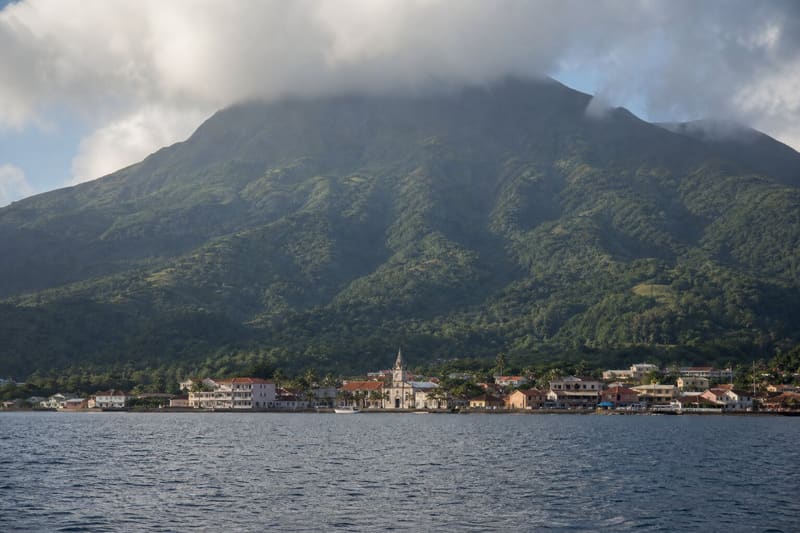
Saint-Pierre, Martinique, from the water with Mont Pelée rising behind the town in cloud.
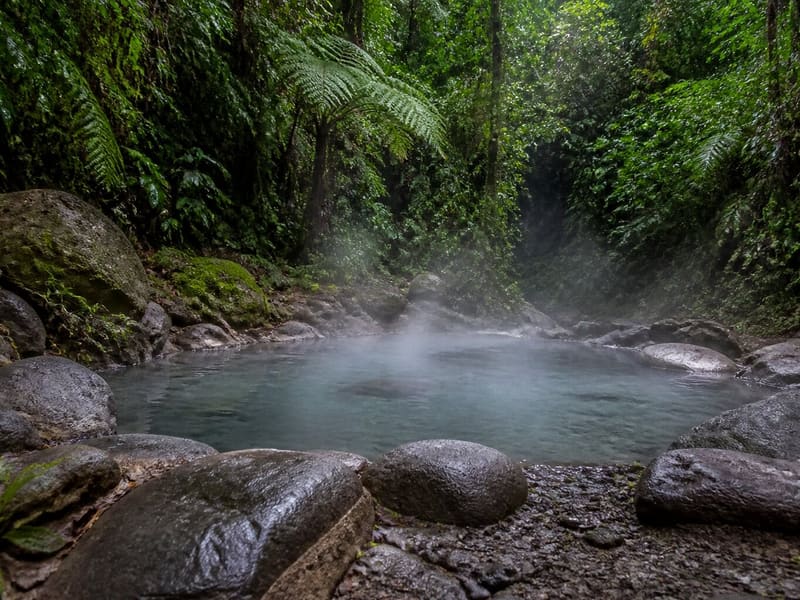
A steaming hot spring pool in a rock basin in the Dominica rainforest, tree ferns closing over it.
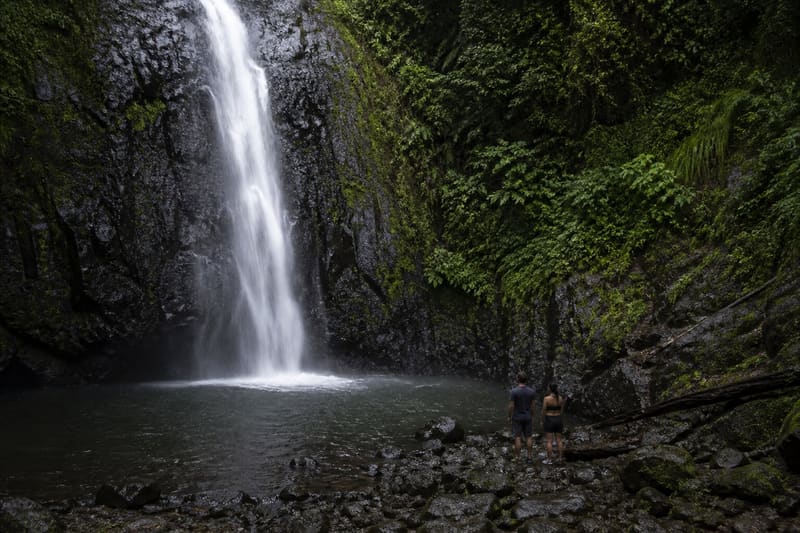
A tall waterfall in the Dominica rainforest with two people at the plunge pool for scale.
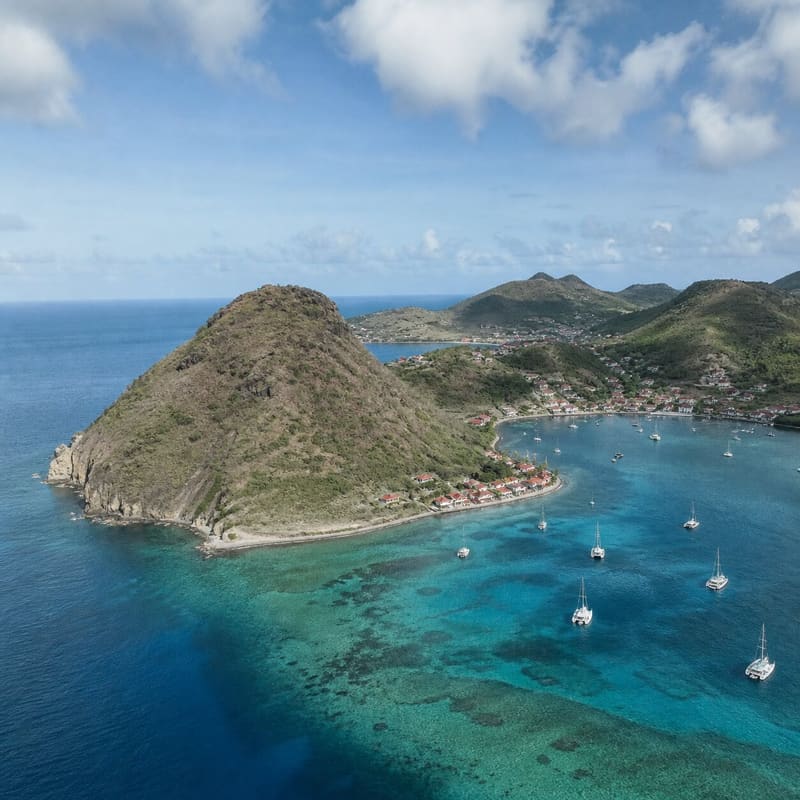
The Pain de Sucre anchorage at Les Saintes from above, yachts in clear water beside a rounded headland.

🇲🇶 🇩🇲 🇬🇵 2 regions

€2,690 pp
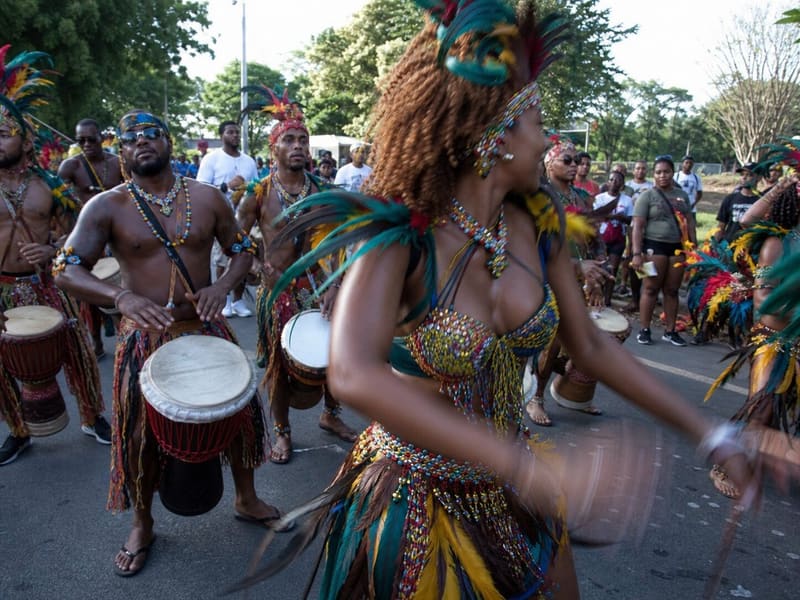
Carnival in Guadeloupe at street level: feathered costume and drums caught mid-movement.

Week 4 · Sat 6 → Sat 13 Feb · PTP → ANU

Carnival in Guadeloupe, then Montserrat and Antigua

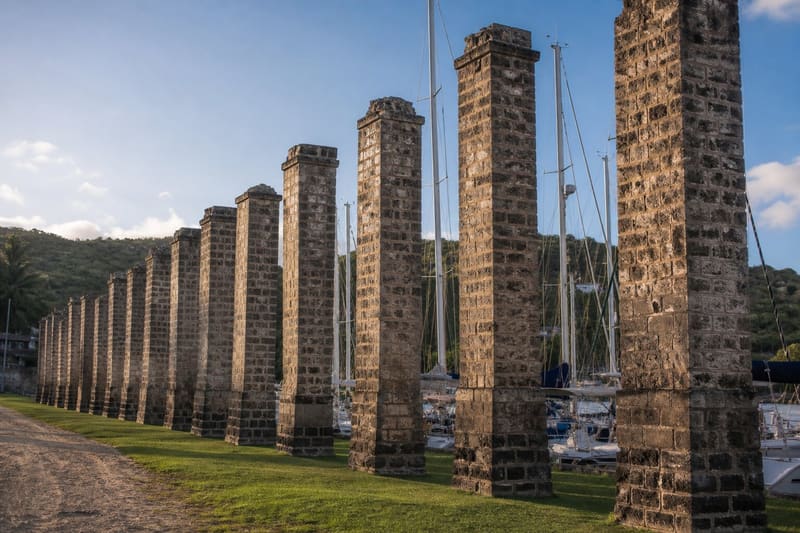
Carnival, the Montserrat exclusion zone, Nelson's Dockyard · ~110 nm

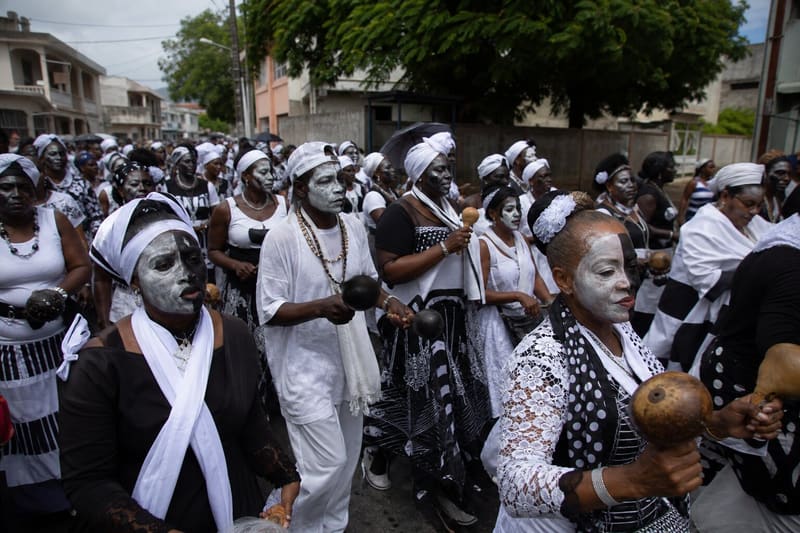
This week opens on Carnival Saturday. The French Antilles carnival runs for days and peaks on Monday 8 and Tuesday 9 February, ending with the whole island dressed in black and white on Ash Wednesday. It is not a tourist production — it is the biggest thing that happens there all year.

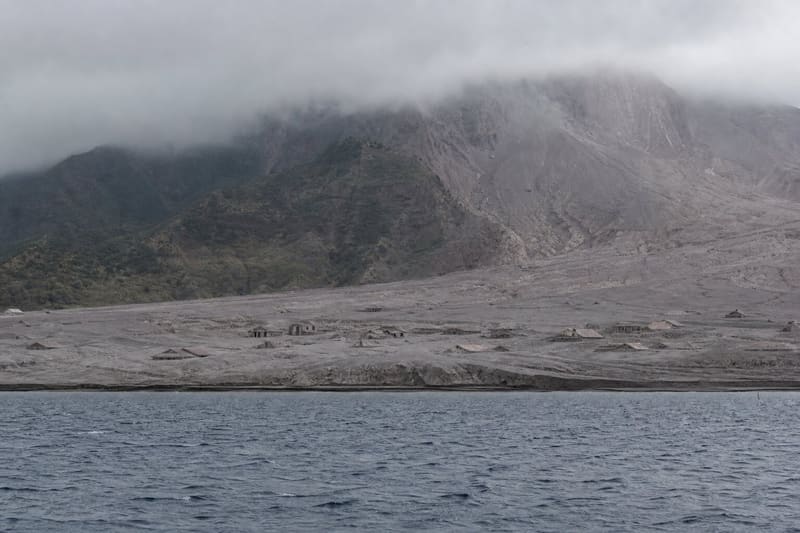
Then north past Montserrat, where half the island is a volcanic exclusion zone and you can see the buried capital of Plymouth from the water, and on to Antigua for Nelson's Dockyard and Nonsuch Bay.

Best for — the single most interesting week ashore. If you can only take one, take this one.

Ash Wednesday in the French Antilles: a street crowd dressed entirely in black and white, moving together.
Plymouth, Montserrat, half buried in grey ash, seen from the water with the volcano behind it.
The Georgian pillars of the old sail loft at Nelson’s Dockyard with yacht masts directly behind them.
Nonsuch Bay, Antigua, from above: turquoise water inside a white reef line across the mouth of the bay.

🇬🇵 🇲🇸 🇦🇬 2 regions

€2,990 pp
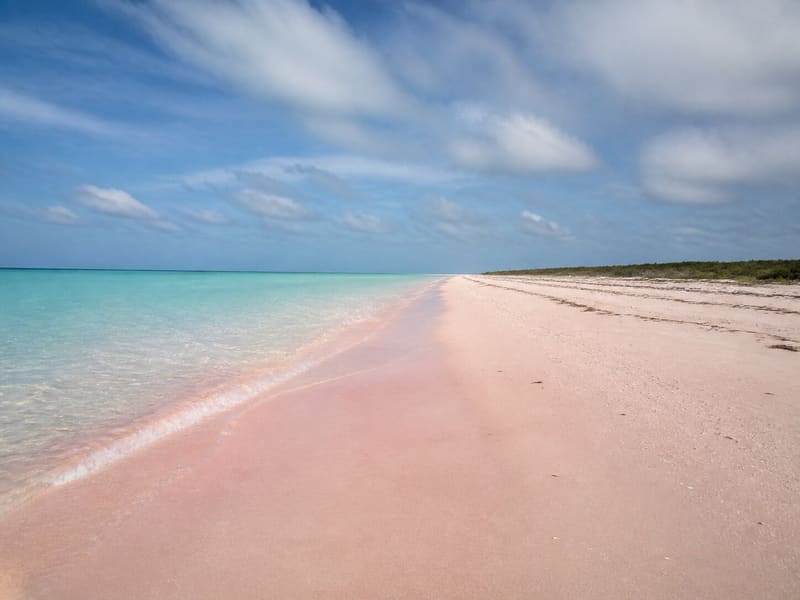
An empty pink-sand beach on Barbuda running dead straight to the horizon.

Week 5 · Sat 13 → Sat 20 Feb · ANU → SXM

Antigua to Sint Maarten, the densest week on the map

Barbuda, St Kitts, Nevis, Statia, Saba, St Barth · ~130 nm · 7 regions

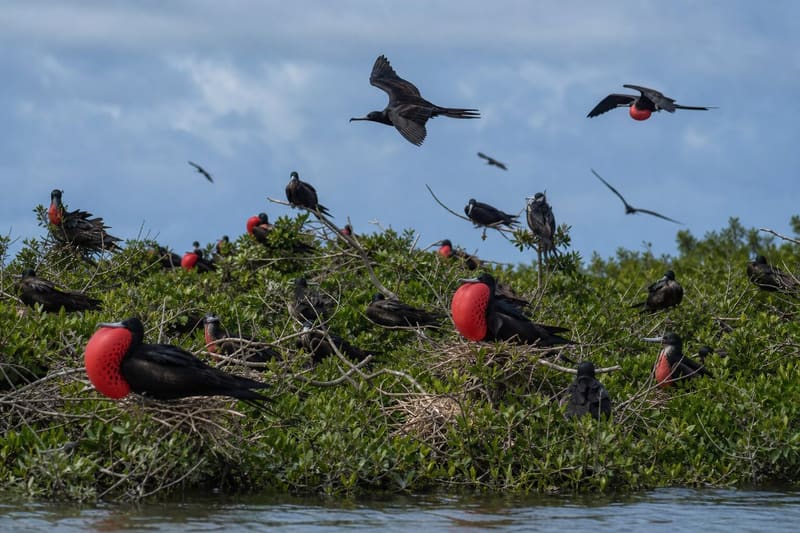
Up to Barbuda first: seventeen miles of empty pink sand, and the frigate-bird colony in Codrington Lagoon. Then the run that makes this trip what it is — St Kitts, Nevis, Sint Eustatius, Saba and St Barth, five separate places within sight of one another, most a two-hour hop apart.

Saba is a single volcanic cone rising straight out of deep water with no harbour and no beach, one of the strangest islands in the Atlantic, and the diving off it is exceptional. Seven new regions in seven days.

Best for — collectors. Nothing else on the route comes close for countries per mile.

Frigate birds nesting in low mangrove in Codrington Lagoon, Barbuda, several males with scarlet pouches inflated.
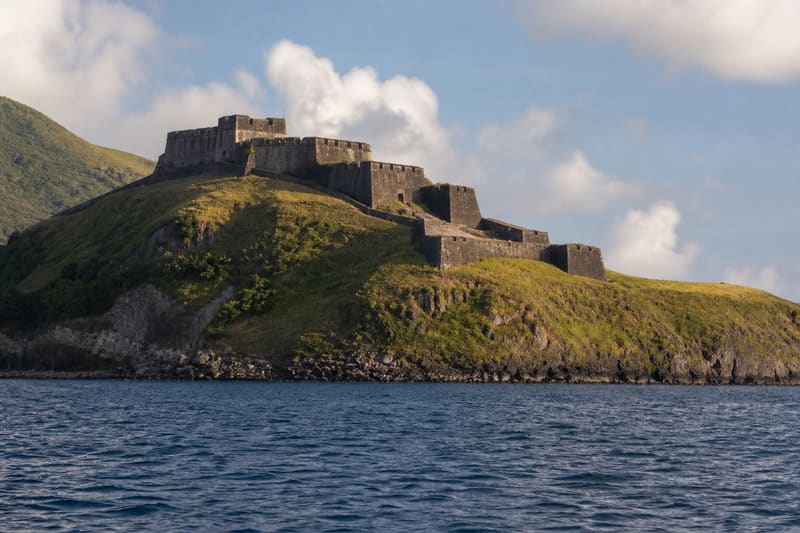
Brimstone Hill Fortress on St Kitts from the sea: dark stone ramparts high on a green headland.
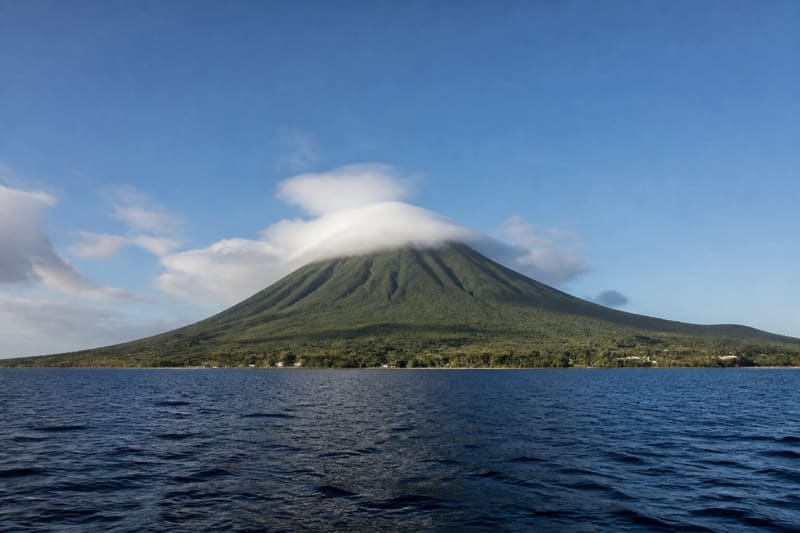
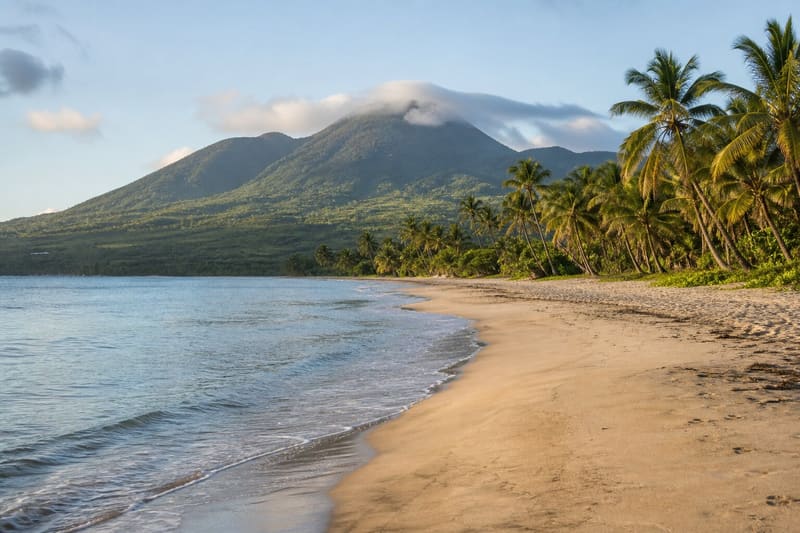
Nevis Peak from the sea: a symmetrical green cone with cloud on the summit.
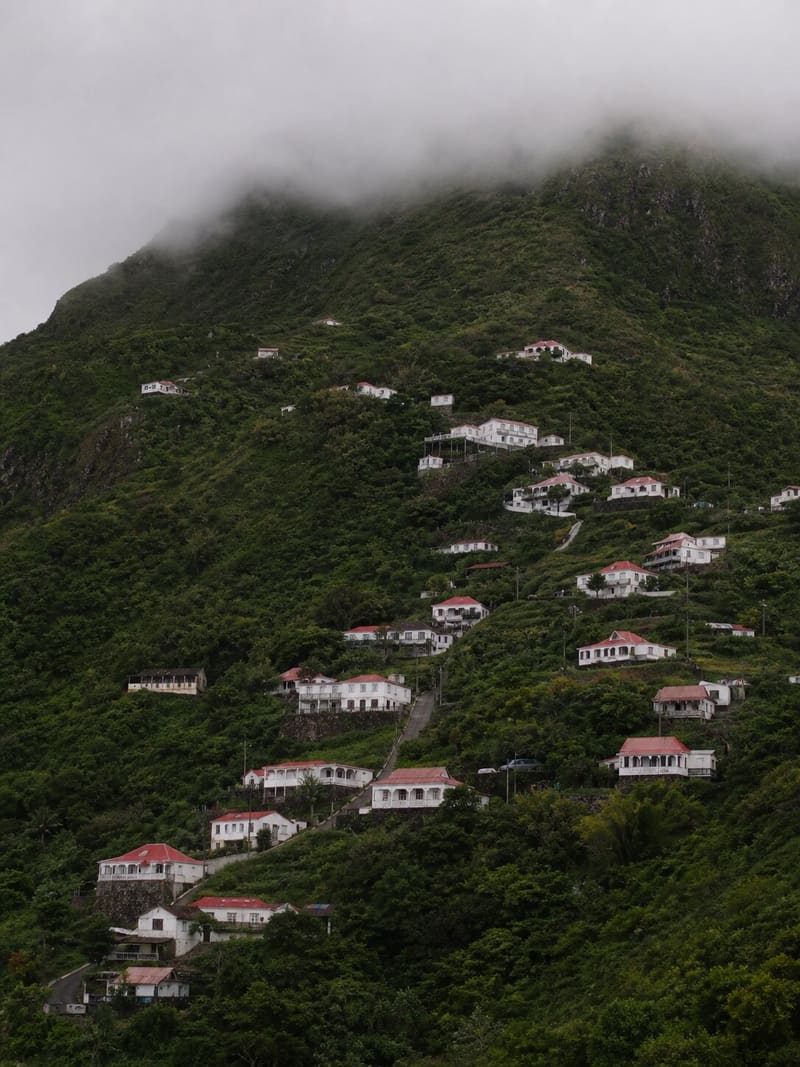
Windwardside on Saba: white houses with red roofs on a steep green mountainside under low cloud.

🇦🇬 🇰🇳 🇧🇶 🇧🇱 🇸🇽 7 regions

€2,990 pp
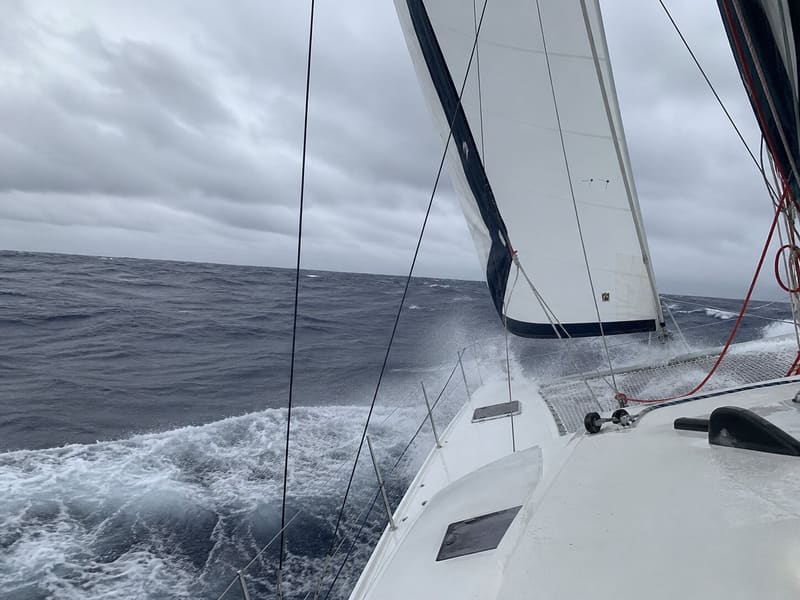
Open ocean from the deck under sail: Atlantic swell running, no land, the boat working.

Week 6 · Sat 20 → Sat 27 Feb · SXM → FDF

Sint Maarten to Martinique, the long way home

Saint-Martin, Anguilla, then 330 nm downwind · ~400 nm

The only island in the world split between two countries you can walk across in an afternoon: we clear into Dutch Sint Maarten and French Saint-Martin separately, because they separately are. Then Anguilla and Road Bay at the top of the chain, before turning south for the run back to Martinique — around 330 miles, downwind, in the strongest and steadiest breeze of the whole six weeks.

Best for — people who want to be at sea. Honest warning: this is the passage week, not the sightseeing one. Starlink runs email-only offshore.

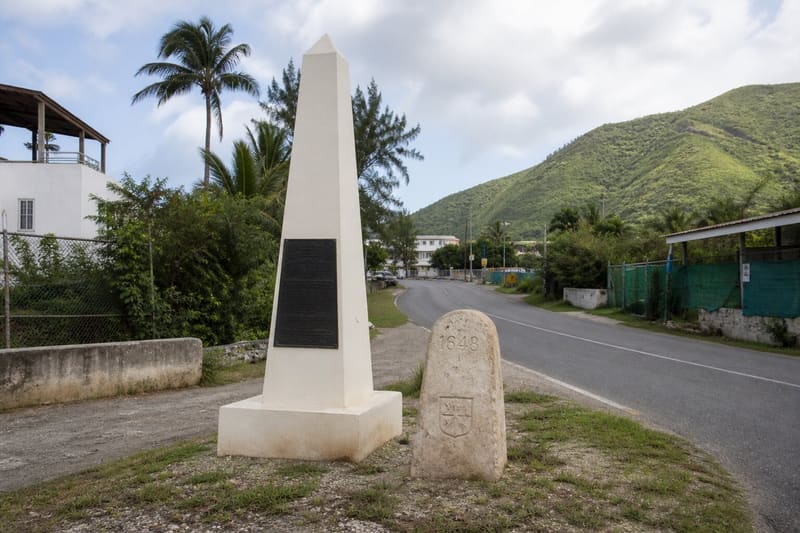
The stone border marker on the road between Sint Maarten and Saint-Martin.
Shoal Bay, Anguilla: a long empty white beach meeting very pale turquoise water.

🇸🇽 🇲🇫 🇦🇮 🇲🇶 2 regions

€2,290 pp

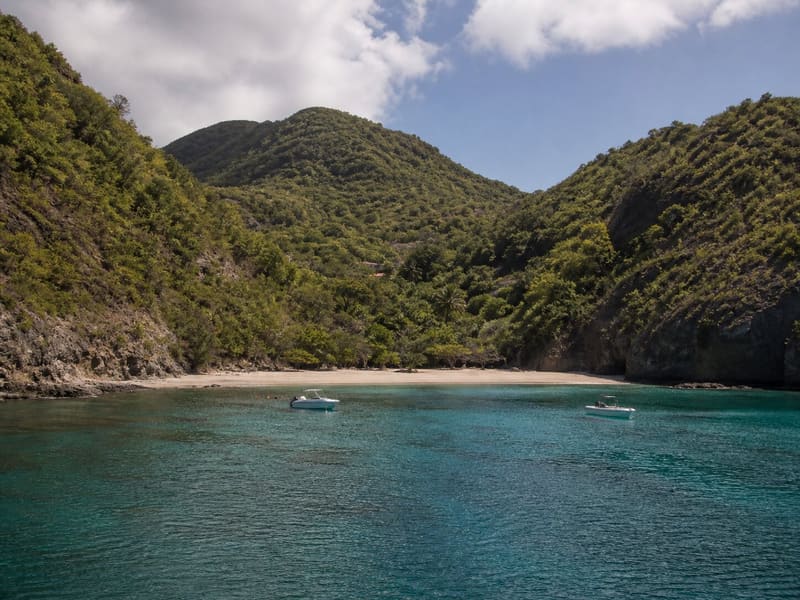
Four more, larger: the cove at Pain de Sucre in week 3, then three from the week that collects seven regions — Pinney's Beach on Nevis, the lower town at Oranjestad on Statia, and Gustavia in the evening.

Why the weeks are not all the same price

Weeks 4 and 5 are the ones everybody will want — Carnival, and seven regions in seven days through the Leewards — so they carry the top price. Weeks 2 and 6 are the two repositioning legs. Week 2 beats back up the chain into the wind and revisits islands week 1 already saw; week 6 is four hundred miles of open ocean with two stops. They are cheaper because they are honestly the quieter weeks, and because Grenada's airport needs a connection where the others do not.

If what you actually want is to sail — night watches, real distance, the boat properly loaded up in twenty-five knots — weeks 2 and 6 are the best on the route and the cheapest. That is not a consolation prize; it is a different holiday.

Weather moves things. January means steady north-east trades at 15–25 knots, which is excellent sailing, but occasional long-period swell from North Atlantic storms makes a few open anchorages — Saba and Statia especially — unusable for a day or two. When that happens we reorder within the week. The Saturday handovers are fixed, because people have flights; everything between them is not. Two to three of the 42 days are held as weather reserve.

The boat

A catamaran, not a yacht that leans

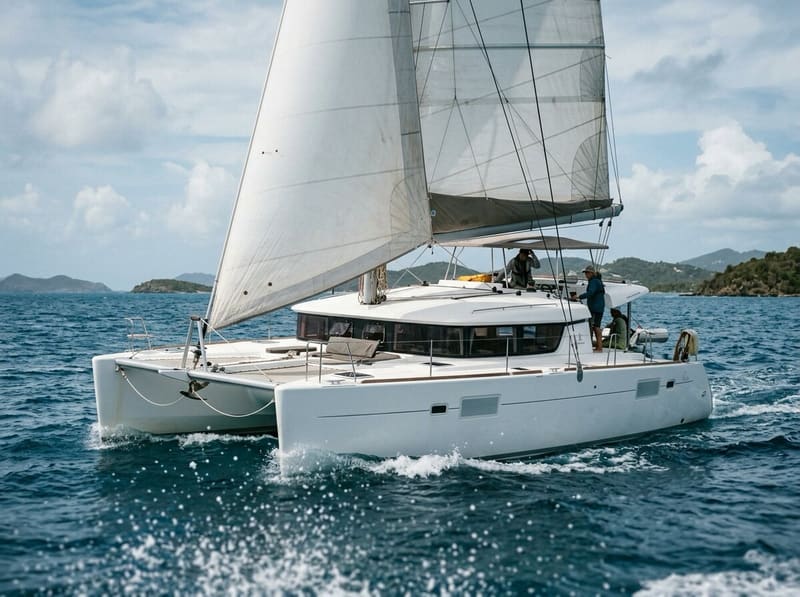
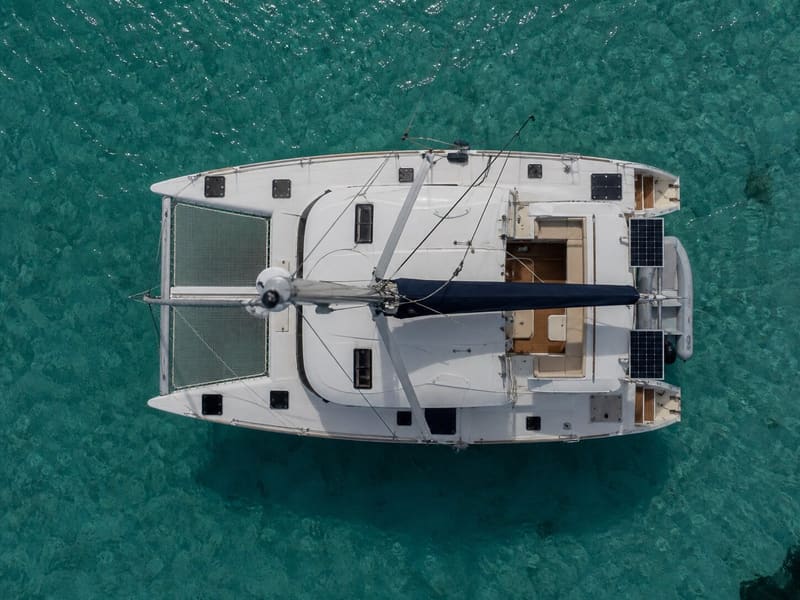
A Lagoon 43 built in 2026: two hulls, flat, 13.9 metres long and 7.7 wide. Nothing about six weeks aboard requires you to be brave.

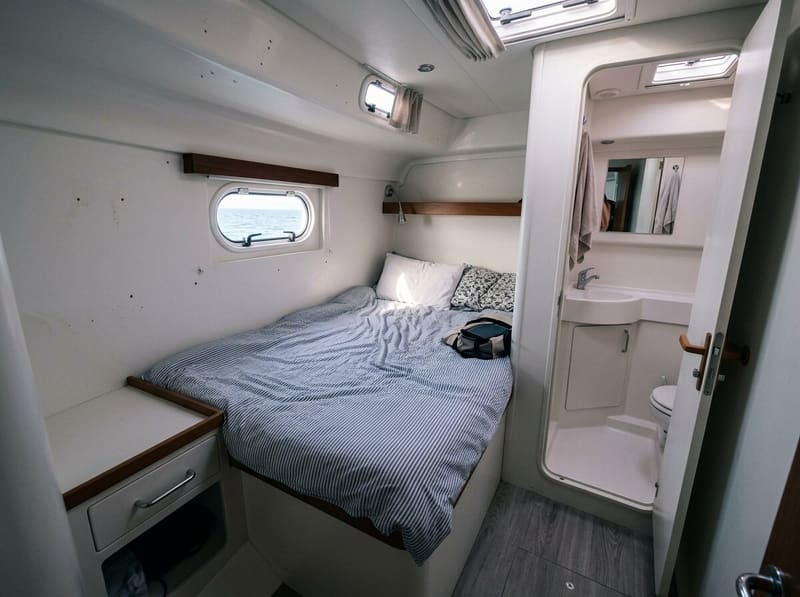
Four double cabins, and every one of them has its own bathroom with a separate heads. Three are open to guests; the skipper and the cook have the forepeak cabins, so nobody is sleeping in a corridor and no guest cabin is taken by crew.

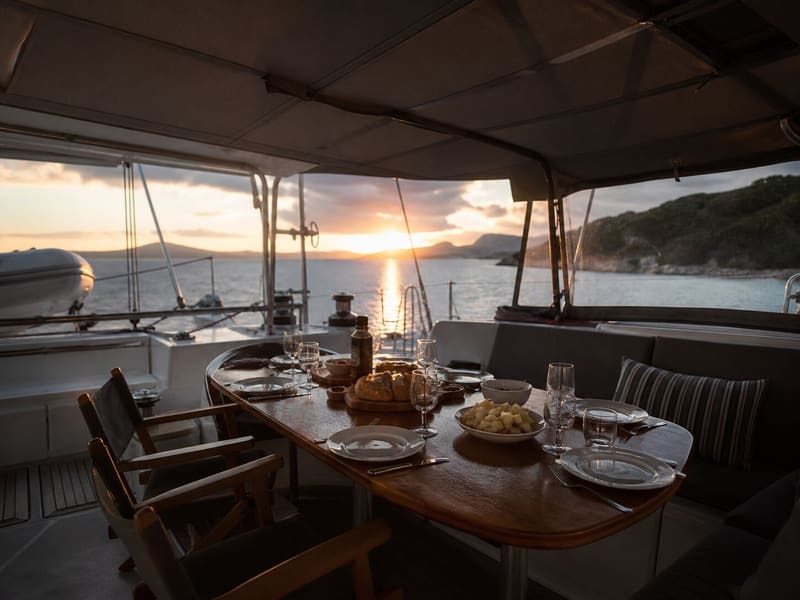
The cockpit is the living room. It is shaded, outdoors, and big enough for all ten of us to eat at the same table — most of the six weeks happens there rather than below.

Two 57 hp Yanmars for when the wind stops, a dinghy and outboard for reefs and getting ashore, and 1.4 m of draft, which is shallow enough to anchor close in.

Type
Lagoon 43 cruising catamaran, built 2026
Length
13.9 m overall
Beam
7.7 m
Draft
1.4 m
Cabins
Four doubles, each with its own bathroom and separate heads
Crew
Professional skipper and a cook, both in the forepeak cabins
Engines
Two 57 hp Yanmar diesels
Tender
Dinghy and outboard included
Aboard
Ten people: eight guests, skipper, cook

Where you sleep

cabin cabin cabin cabin bathroom bathroom bathroom bathroom crew crew saloon cockpit bow stern

Schematic, drawn for this page: four doubles with their own bathrooms, crew forward. The manufacturer's deck plan goes in the frame beside it.

A cruising catamaran seen from directly overhead at anchor: both hulls, the trampoline forward, the cockpit aft.
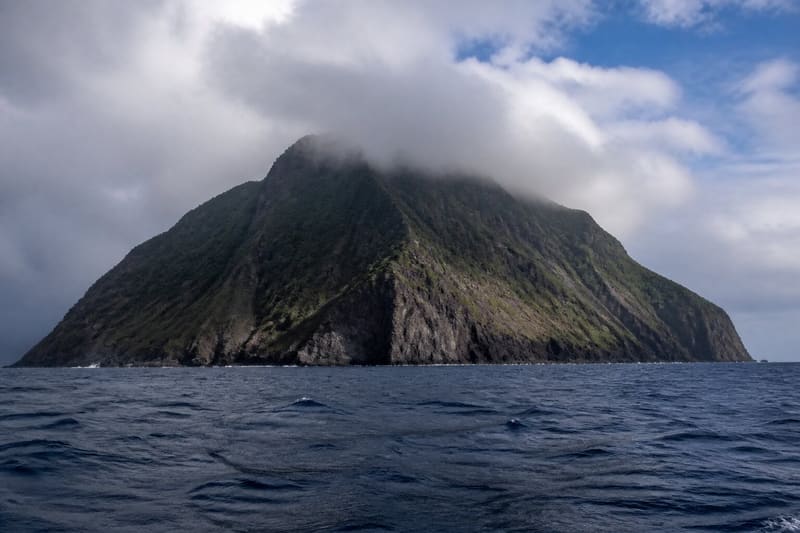
Saba from the sea: one steep volcanic island rising out of deep water, cliffs straight down, no beach, cloud on the summit.

Underwater

Ten Caribbean sites, and we arrive at them by boat

Saba is a single volcanic cone rising straight out of deep water with no harbour and no beach — one of the strangest islands in the Atlantic, and the diving off it is exceptional. The route passes some of the best diving in the eastern Caribbean, and it passes it from the water: we arrive by boat at sites most visitors reach on a day trip from a hotel.

Saba

Third Encounter · Eye of the Needle · Diamond Rock

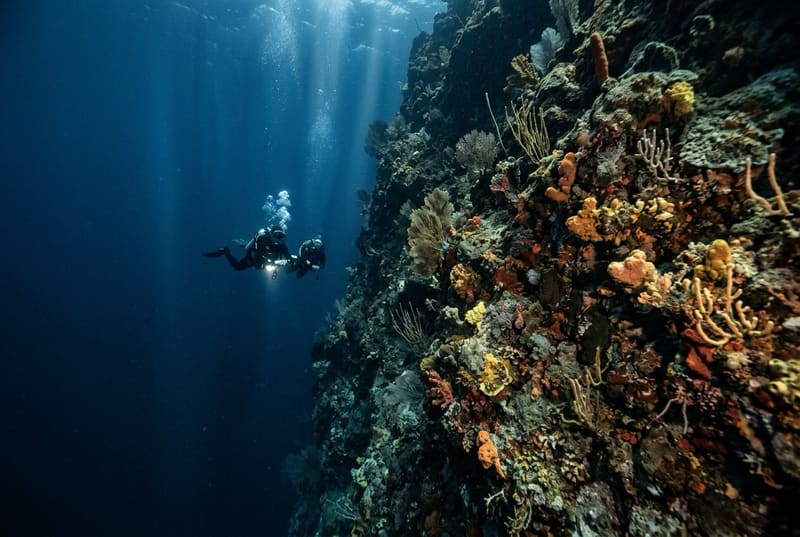
Volcanic pinnacles rising from deep water inside a national marine park. The standout of the whole route.

Advanced

Sint Eustatius

Statia Marine Park · Charles L. Brown wreck

Lava fingers and a 100 m former cable ship on the bottom. Almost nobody dives here.

Intermediate

Dominica

Champagne Reef · Scott's Head Pinnacle

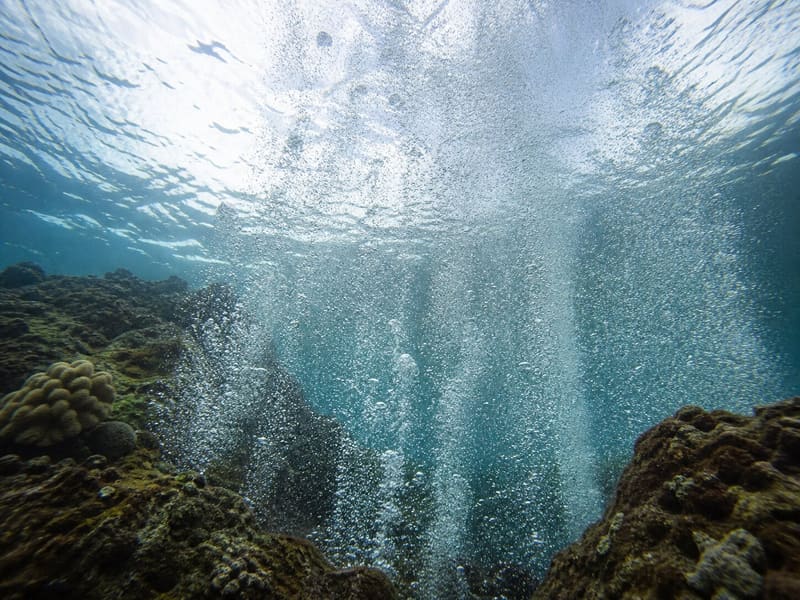
Volcanic gas bubbles up through the coral — you swim through a champagne glass. Snorkellable, which makes it the best site on the route for non-divers.

All levels

Grenada

Molinière sculpture park · Bianca C

The world's first underwater sculpture park, shallow enough to snorkel; and a 180 m liner on the seabed for those qualified to go down to her.

All levels / Advanced

Tobago Cays

Horseshoe Reef

A reef arc with nothing behind it but open Atlantic, and green turtles grazing on the inside. The best snorkelling of the six weeks.

Snorkel

Guadeloupe

Réserve Cousteau, Îlets Pigeon

Cousteau's own reserve, protected since 1979.

All levels

Saint Lucia

Wall under Petit Piton

The Piton drops below the water as steeply as it rises above it.

Intermediate

St Kitts & Nevis

River Taw wreck · Monkey Shoals

A shallow, easy wreck and a reef with rays.

All levels

Antigua & Barbuda

Cades Reef · Palaster Reef

Long fringing reef, and Barbuda's shelf with wrecks on it.

All levels

Sint Maarten

HMS Proselyte

A frigate lost in 1801, in about 15 m — cannon and anchors still on the bottom.

All levels

Sites and depths are indicative and get confirmed with the local operator when we book; conditions and access change.

Two divers small against a deep pinnacle wall of sponge and soft coral, blue water behind them.
Columns of volcanic gas bubbles rising through the reef at Champagne, Dominica, shot from below toward the surface.

What is not aboard

There is no compressor and no tank storage on this boat. Diving is booked with local operators island by island, which the skipper arranges. That is normal for a charter catamaran, but you should read it here rather than discover it in week five.

Certified divers bring their card and logbook. Beginners can do a Discover Scuba almost anywhere on the route — Saba and Statia are not the islands to learn on.

Budget roughly €70–90 pp for a single tank with a local shop and €120–160 pp for a two-tank morning, gear included. That is out of pocket, not in the cabin price.

What is actually down there, and alongside

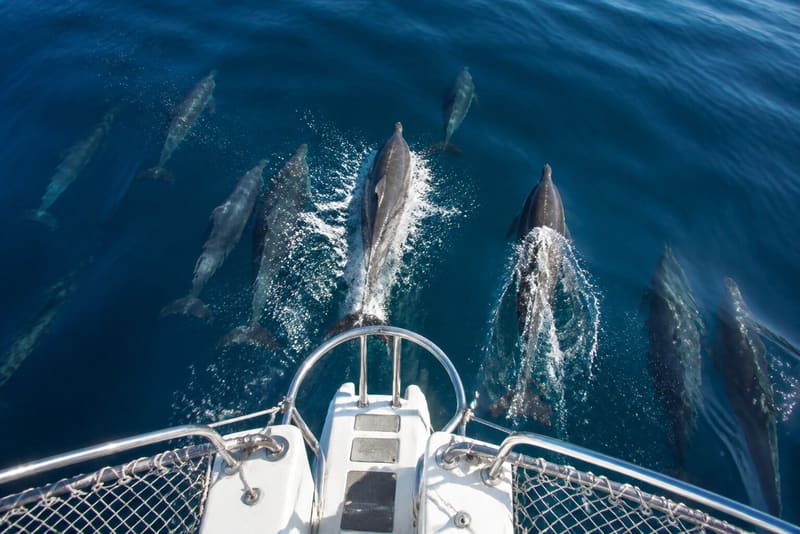
Spinner dolphins riding the bow wave, seen from the bow looking down at them breaking the surface.
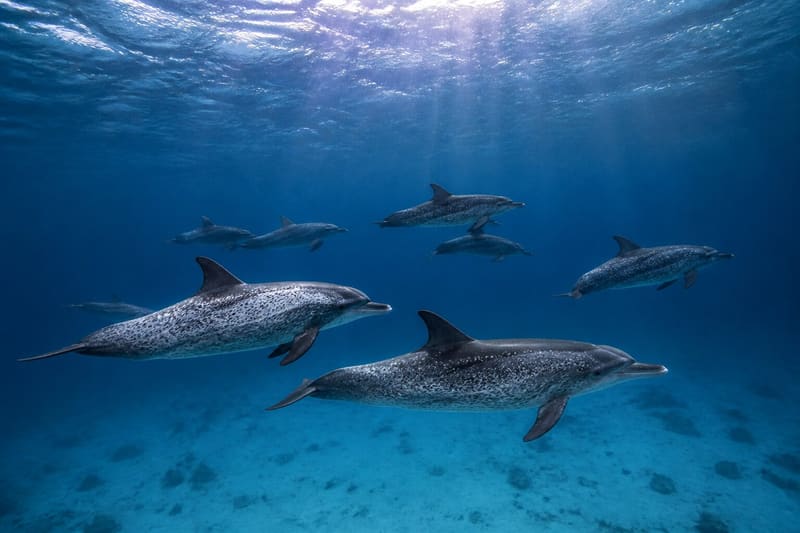
A small pod of spotted dolphins in clear deep blue water with sunlight shafts from the surface.
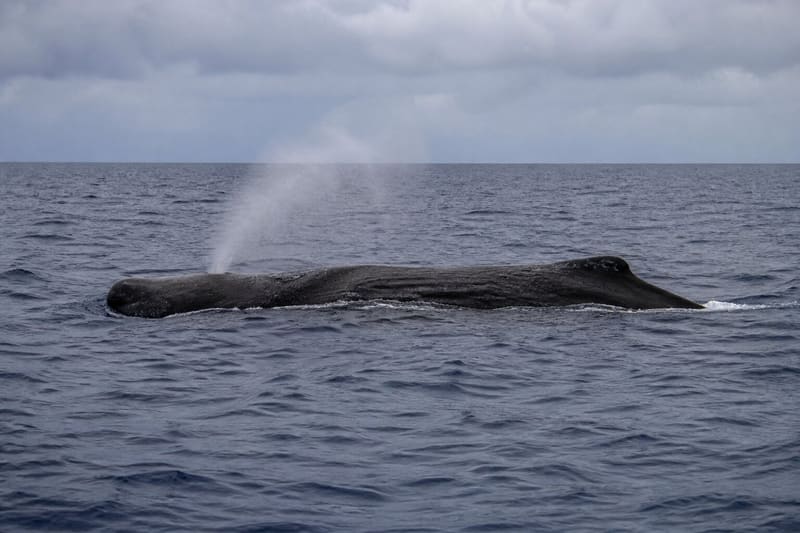
A sperm whale at the surface in deep water off Dominica, its blow drifting, seen from a distance.
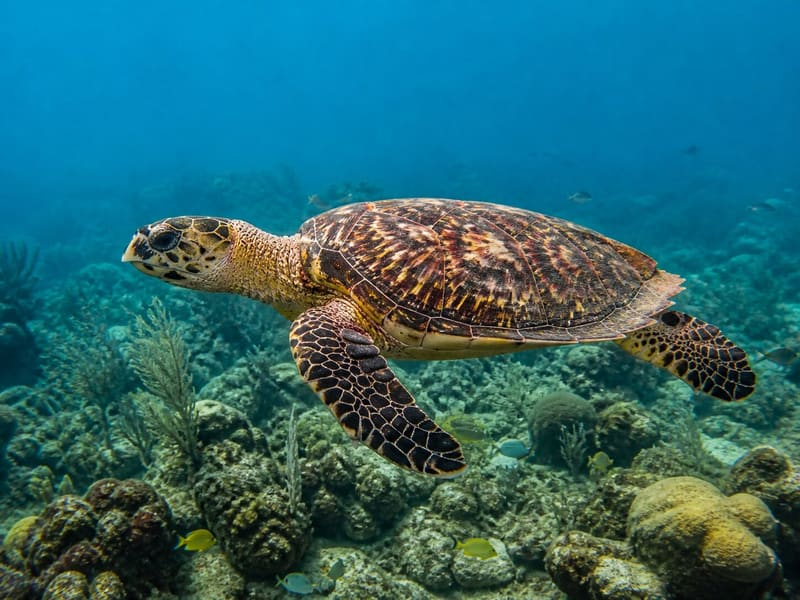
A hawksbill turtle swimming over a shallow reef, its shell patterning sharp, small fish around it.
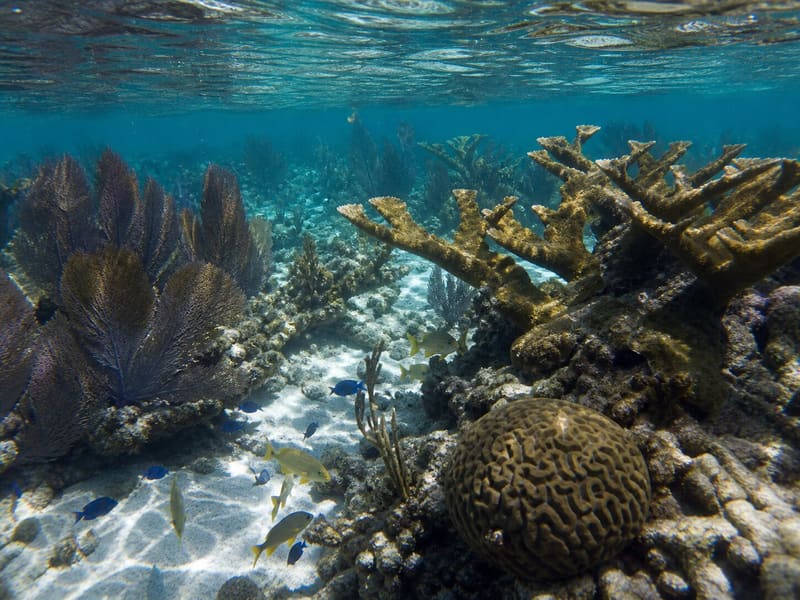
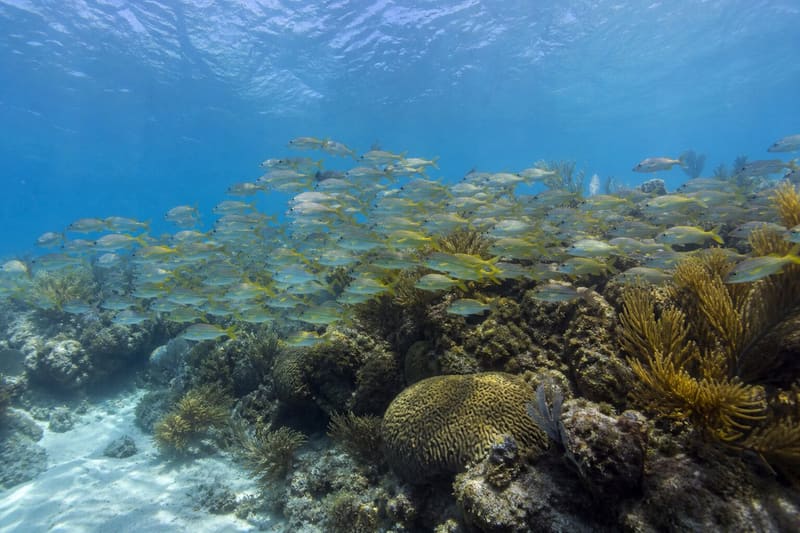
A school of silver and yellow reef fish swirling over sea fans and brain coral in shallow water.
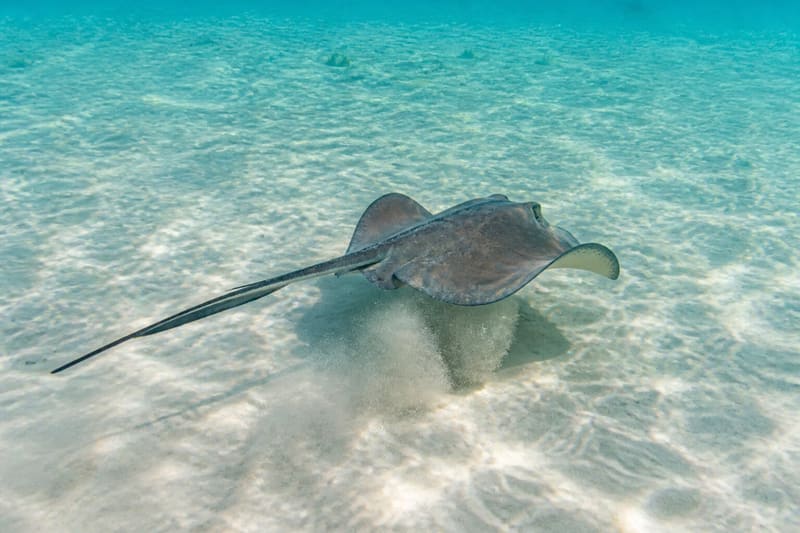
A southern stingray gliding low over rippled pale sand in shallow water.
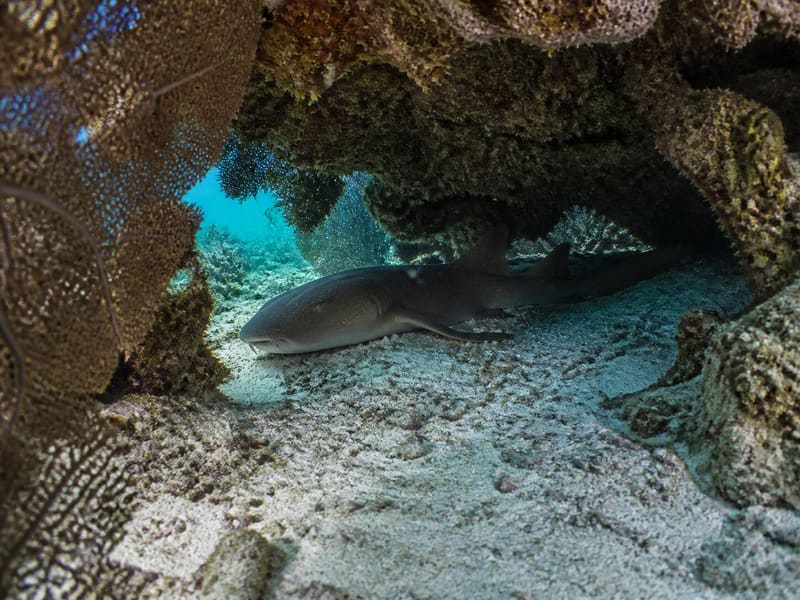
A nurse shark resting under a coral ledge, photographed at a distance.
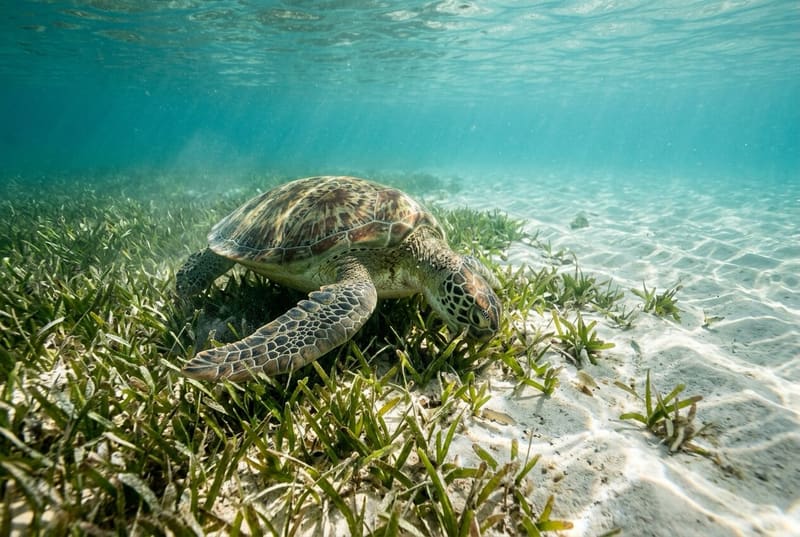
A green turtle grazing on seagrass in shallow clear water.

Dolphins on the bow wave and underwater, a sperm whale off Dominica, a hawksbill, a reef school, a stingray, a nurse shark, a green turtle in the Cays. None of this is scheduled and none of it is promised; it is what the water along this route has in it.

Snorkelling is included, and a non-diver is not a spectator

Masks, snorkels and fins are aboard for everyone, and the dinghy exists precisely to drop people on a reef. Tobago Cays, Champagne Reef, Molinière and the Pillars of Hercules are all snorkel sites: the turtles, the bubbles and the sculptures do not require a certification card.

A shallow coral garden seen from just under the surface while snorkelling, the silver of the surface above.
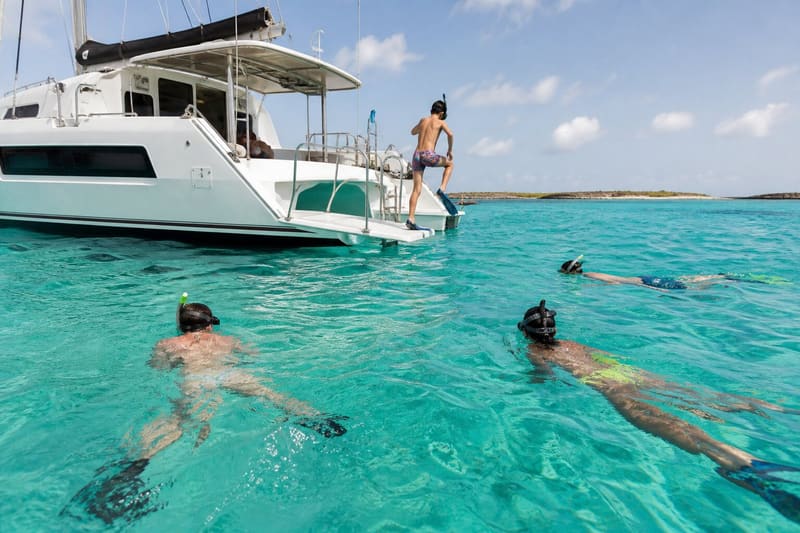
People swimming and snorkelling beside the catamaran at anchor, one of them stepping in off the transom.

Left, two metres down off the dinghy. Right, the swimming that happens most afternoons without anyone planning it.

10dive sites on the route
1801the year the Proselyte went down
100 mthe cable ship on the bottom at Statia
1979Réserve Cousteau protected since

Life aboard

Food, internet, and not much of a schedule

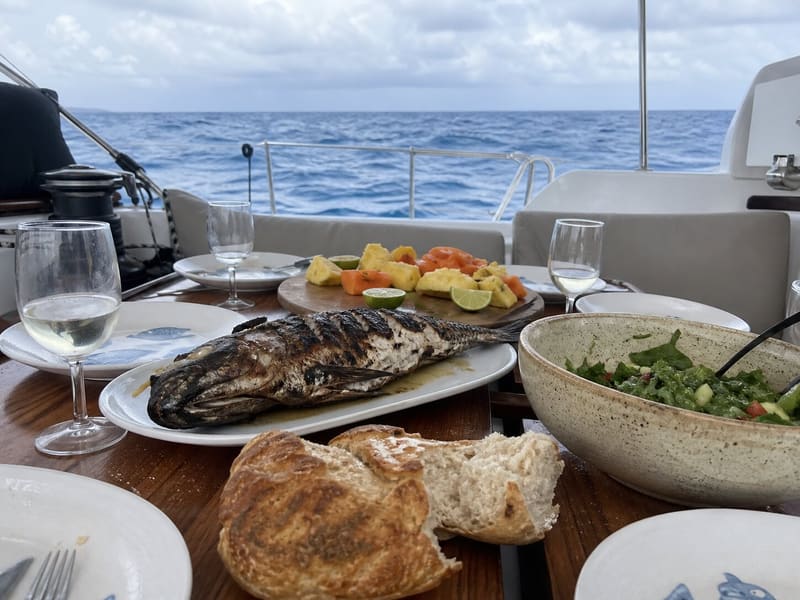
A meal on the cockpit table: whole grilled fish, bread, cut fruit and glasses of wine, the horizon just behind.

There is a cook aboard for all six weeks

This is not a self-catering charter where the guests take turns at the stove. Three meals a day are included, plus drinking water: breakfast in the cockpit, lunch usually at anchor, dinner aboard or ashore depending on where we are.

The provisioning is the part I am most pleased with. Half of this route is France — Martinique, Guadeloupe, Les Saintes, St Barth — which means real supermarkets, proper cheese, charcuterie and wine at French prices, in the Caribbean. The other half is markets: Dominica's produce, Grenadian spice, fish bought off the boat that caught it, lobster in the Tobago Cays. Six restocks, one per handover port, so the food changes as the islands do rather than being one supermarket run stretched over six weeks.

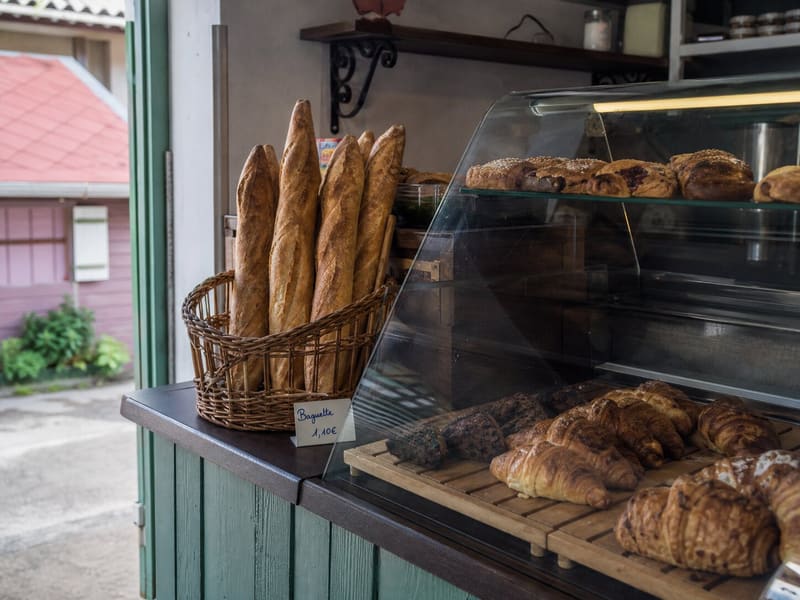
A bakery counter in Les Saintes: baguettes upright in a basket, pastries under glass, a handwritten price card.

Les Saintes, on a Tuesday morning in week 3.

Alcohol and soft drinks are not included. There is a ship's bar sold at cost against a running tab, which is fair and keeps that conversation off the boat. Dietary requirements are handled if you tell me at booking.

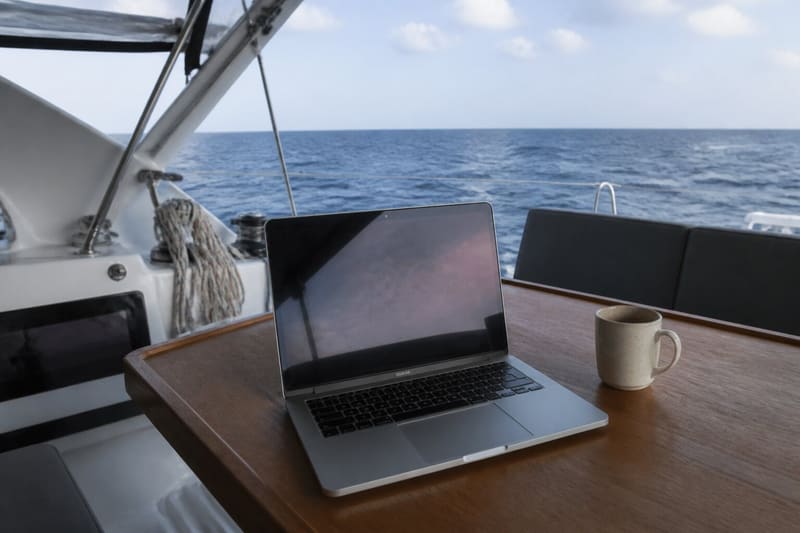
An open laptop on the cockpit table with the sea directly behind it.

You can work from this boat

Starlink Maritime is aboard for the whole trip: unlimited data within 12 nautical miles of shore, which is where the boat is almost all of the time. People who cannot take six weeks of leave can take six weeks of laptop.

The one honest exception is the week 6 offshore passage, where coverage runs on a lower-priority mode. Treat that week as email, not calls.

The shape of a day

There is not much of a schedule, which is the point. We sail in the morning while the breeze is steady, arrive somewhere in the early afternoon, swim, go ashore or don't, eat in the cockpit and sleep at anchor. Two to four hours of actual sailing on most days, and nobody is required to do anything with a rope.

About seasickness

Worth saying plainly. Catamarans do not heel; January trade-wind sailing in the lee of the islands is flat water; and there is exactly one genuinely open passage — week 6 — which you can simply not book.

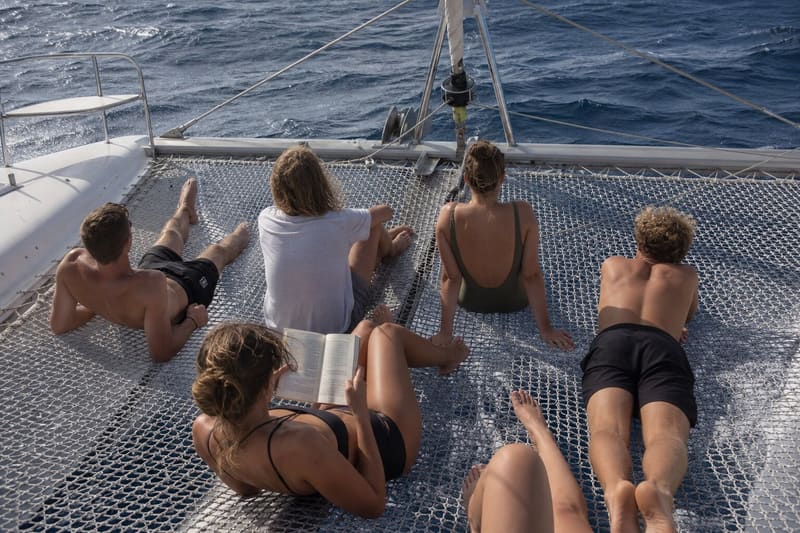
People lying on the trampoline netting at the bow, the sea rushing past below the mesh.
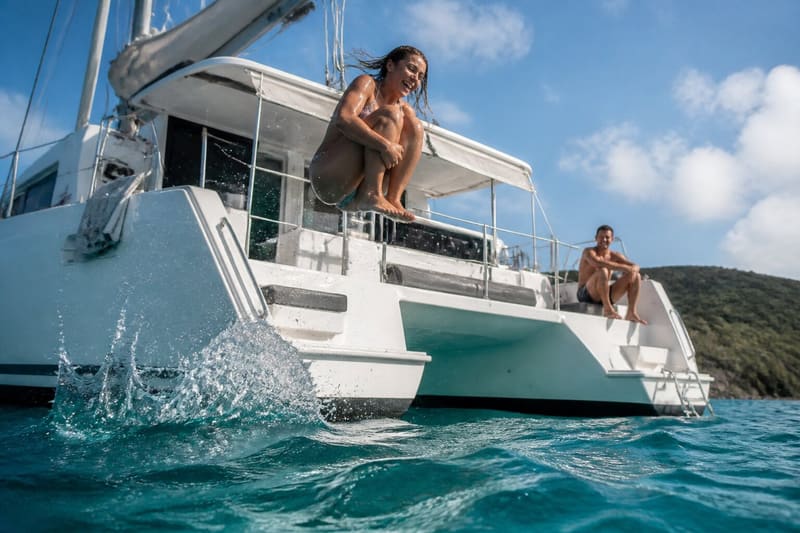
Someone mid-air off the side deck into deep clear water, another person watching from the transom.
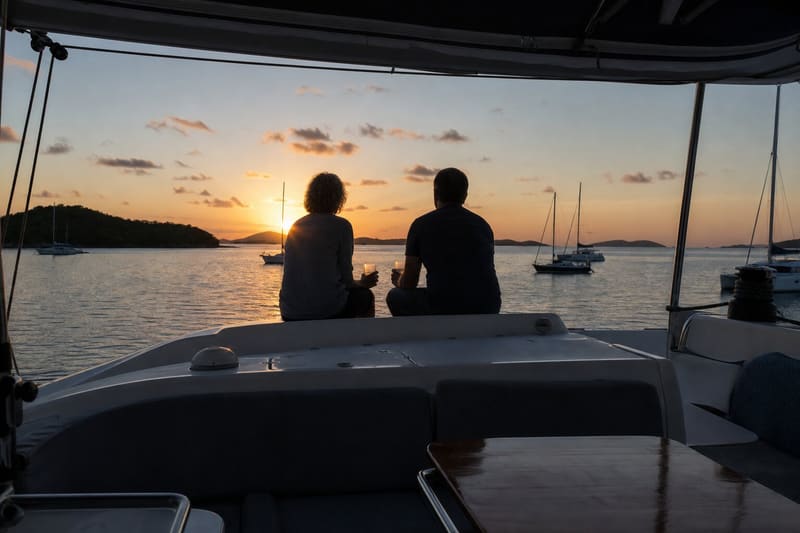
Sunset from the cockpit at anchor, two people sitting on the coachroof with drinks, backs to the camera.

This is a trip with friends rather than a product with customers, and those three pictures are most of what I mean by it.

The card

Fifteen jurisdictions, six countries, 19 regions, 42 days

Three different ways of counting, because different people aboard care about different ones. If you count UN countries, the southern half is where your value sits. If you count NomadMania regions, the north is.

Tap a tile to stamp it. Fifteen tiles, six of them UN member states, six Saturdays, one boat.

The argument, in one number

Nowhere else on earth packs sovereign borders this tightly. Between Antigua and Anguilla — a stretch you can cross in four days of two-hour hops — there are nine separate jurisdictions in 78 nautical miles: Antigua & Barbuda, St Kitts, Nevis, Sint Eustatius, Saba, Saint-Barthélemy, Sint Maarten, Saint-Martin and Anguilla.

Stops per 100 nautical miles, by stretch
StretchDistanceDensity
Northern Leewards — Antigua → Anguilla78 nm11.5
Mid-chain — Martinique → Antigua150 nm2.0
Windwards & south — Martinique → Grenada200 nm2.0

Four of these countries are worth two regions each

Antigua & Barbuda, St Kitts & Nevis, St Vincent & the Grenadines and Grenada each split into two NomadMania regions — eight of the nineteen — and in three cases the second is a trivially short hop. Nevis is 10 nm from St Kitts. Carriacou is 12 nm from Union Island. Bequia is a normal Grenadines stop. Barbuda is 32 nm north of Antigua. The route deliberately picks up all four.

Worth knowing the other way round: Guadeloupe and all its dependencies — Les Saintes, Marie-Galante, La Désirade — are a single region however many of them you touch. Lovely islands; they just do not multiply.

How the numbers were checked

Every region name and ID on this page was pulled directly from the NomadMania API and checked against a real profile to confirm which are genuinely new. That is how we know Guadeloupe's dependencies are one region rather than four, and that Nevis and Carriacou score separately from their parent islands. Those two facts changed the route.

The tool that does it is wanderfill, an open-source project for working with NomadMania programmatically — region lookups, visit tracking, bulk operations the web interface cannot do: github.com/faeton/wanderfill.

One correction, left in

An earlier draft of this plan counted Marie-Galante and La Désirade as regions of their own and printed a much larger total. It was wrong: they are one region together with Guadeloupe, which is why the route deliberately does not detour for them. The correct figure is 19, and it is confirmed twice — the per-jurisdiction column beside this sums to 19, and the per-week column, 3, 3, 2, 2, 7 and 2, also sums to 19. Publishing the place where the first analysis was wrong makes the rest of the numbers easier to trust, not harder.

6UN member states
15jurisdictions, flags and customs desks
19NomadMania regions
42days aboard
7regions in week 5 alone
11.5stops per 100 nm in the Northern Leewards
The 15 jurisdictions and their NomadMania region IDs
JurisdictionStatusReg.ID
🇻🇨 St Vincent & the GrenadinesUN21089 · 1090
🇬🇩 GrenadaUN21074 · 1075
🇱🇨 Saint LuciaUN11088
🇩🇲 DominicaUN11067
🇦🇬 Antigua & BarbudaUN21058 · 1059
🇰🇳 St Kitts & NevisUN21086 · 1087
🇲🇶 MartiniqueFrance11071
🇬🇵 Guadeloupe + Les SaintesFrance11070
🇲🇸 MontserratUK11096
🇧🇶 Sint EustatiusNetherlands11084
🇧🇶 SabaNetherlands11083
🇧🇱 Saint-BarthélemyFrance11073
🇸🇽 Sint MaartenNetherlands11085
🇲🇫 Saint-MartinFrance11072
🇦🇮 AnguillaUK11093
Total6 UN member states19

Saba and Sint Eustatius share the 🇧🇶 Caribbean Netherlands flag but are separate regions. Region IDs and counts from the NomadMania API, checked August 2026.

Practicalities

Visas, flights, and the parts you would ask about anyway

Fifteen jurisdictions means fifteen sets of paperwork, and the boat clears in as a single vessel on one crew list — so everyone's documents need to work everywhere. That is why this section is long rather than folded away.

Every jurisdiction, two passports

Two positions per place, because those are the two passports the people I am asking actually hold. On a phone each jurisdiction is a card carrying both; on a wider screen they are two columns.

Entry position for each of the fifteen jurisdictions, for a Ukrainian biometric passport and for an EU, EEA or Swiss passport
WhereUkrainian biometricEU / EEA / Swiss
Martinique France · week 1, 3, 6 Visa-free 90 days in 180. Overseas France sits outside Schengen and Ukraine is exempt there in its own right. EU territory. An outermost region: free movement, national ID card or passport. Not in Schengen, so there is still a border check.
St Vincent & the Grenadines UN · weeks 1–2 Visa-free 3 months. Visa-free. The EU treaty floor is 90 days in 180; the national list gives most EU passports 6 months. No online form — a paper card on arrival. Irish passports are listed separately: check your own line.
Grenada UN · weeks 1–2 Visa-free 3 months. Visa-free 3 months. Grenada launched an electronic E/D card at edcard.gov.gd in March 2026 — free, filled in before arrival.
Saint Lucia UN · week 2 Consular visa. The one piece of paperwork on this route with a lead time. By post to the High Commission in London, no personal appearance, about a week. Start it in October. Visa-free 90 days in 180 under the EU–Saint Lucia short-stay waiver of 2015. Nothing to apply for. Irish passports sit on a separate line — six weeks — so check yours.
Dominica UN · week 3 Visa-free 90 days. Visa-free. 90 days in 180 by treaty, 6 months on the national list. Online immigration and customs form at edcard.dominica.gov.dm.
Guadeloupe + Les Saintes France · weeks 3–4 Visa-free 90 days in 180. EU territory. Outermost region, same as Martinique: ID card or passport, border check on arrival.
Montserrat UK · week 4 eVisa. immigration.ms, US$50, approved in about 24 hours, valid 12 months, multiple entry, credit card only. No US or UK substitution here. Visa-free up to 6 months. The immigration.ms eVisa exists for passports that are not exempt, and an EU one is.
Antigua & Barbuda UN · weeks 4–5 Visa-free 180 days. Visa-free 180 days — but an electronic ED card at ArriveAntigua.com is now required of everyone, at least 24 hours before arrival. Paper cards are no longer accepted.
St Kitts & Nevis UN · week 5 eTA. An online form at knatravelform.kn, not a consulate appointment. Doable a few days ahead from the anchorage. eTA as well. Visa-free 90 days, but since 26 May 2025 every foreign traveller needs the eTA — knatravelform.kn, US$17, single entry, valid 90 days, approved in about a day. This is the one place the EU column is not easier than the Ukrainian one.
Sint Eustatius Netherlands · week 5 Visa-free. Visa-free 90 days. The Caribbean Netherlands run their own visa policy — a Schengen visa is not what is being checked here, and an EU passport does not need one.
Saba Netherlands · week 5 Visa-free. Visa-free 90 days, same policy as Statia.
Saint-Barthélemy France · week 5 Visa-free 90 days in 180. Visa-free. St Barth left outermost-region status on 1 January 2012 and is now an associated overseas country, but EU and Schengen nationals still enter on an ID card or passport with no stated limit.
Sint Maarten Netherlands · weeks 5–6 Visa-free. Visa-free 90 days, and a free digital ED card at entry.sx that explicitly covers yacht arrivals as well as flights. Fill it in before we clear in.
Saint-Martin France · week 6 Visa-free 90 days in 180. EU territory. Saint-Martin is still an outermost region even though St Barth is not — free movement, ID card or passport.
Anguilla UK · week 6 A US, UK or Canadian visa substitutes. Ukraine is on Anguilla's visa list, but a valid US, UK or Canadian visa or green card stands in for one. Send me the expiry date. Visa-free 3 months. No third-country visa needed.

Positions researched from public sources in September 2026 and listed with their sources in SOURCES.md alongside this page. This is a plan, not immigration advice — every position gets confirmed individually before departure, and where a source could not be established the honest answer is to ask the consulate rather than to guess.

On a Ukrainian biometric passport

Eleven of fifteen need nothing at all. Every French island and every Dutch one is visa-free for 90 days, and so are Dominica, Antigua & Barbuda, St Vincent & the Grenadines and Grenada, on 90-day-to-six-month stays.

Two forms, both online. St Kitts & Nevis needs an eTA. Montserrat needs an actual visa, and unlike Anguilla there is no substitution for a US or UK one — but it is an eVisa: immigration.ms, US$50, about 24 hours, valid 12 months, multiple entry, credit card only. Both can be done a few days ahead from the anchorage, and we will send the links and do them together as a crew.

Saint Lucia is the one with a lead time — start it in October. It is the single island on this route that asks Ukrainian citizens for a proper consular visa. Not difficult, not expensive, but it cannot be done last-minute: applications go by post to the Saint Lucia High Commission in London, 1 Collingham Gardens, SW5 0HW, you do not have to appear in person, five documents, about a week of processing. It is one UN country and one region. If you would rather not bother, say so early — we can sail past St Lucia without clearing in, and it costs the trip one stop rather than a problem at the dock.

Anguilla wants a US, UK or Canadian visa. Most people joining already hold at least one. If nobody does, Anguilla is the last stop on the chain and the easiest to drop; it costs one region and nothing else. Either way, tell me at booking and send the expiry date — a visa that lapses mid-trip is the same as not having one.

On an EU, EEA or Swiss passport

Shorter, but not empty. Nothing on this route needs a consulate, and no fee is over US$17 — but five jurisdictions now want something filled in online before you arrive, and one of them charges for it.

  • St Kitts & Nevis — eTA, US$17, knatravelform.kn. The only paid item in this column.
  • Antigua & Barbuda — electronic ED card, ArriveAntigua.com, free, at least 24 hours ahead.
  • Sint Maarten — digital ED card, entry.sx, free, and it covers arrival by yacht.
  • Grenada and Dominica — electronic arrival cards at edcard.gov.gd and edcard.dominica.gov.dm, free.

The French islands are the simple ones: Martinique, Guadeloupe and Saint-Martin are EU outermost regions, so an EU passport or national identity card is the whole answer. They are not in Schengen, so expect a border check anyway. Saint-Barthélemy became an associated overseas country in 2012 and is a shade more complicated on paper, but in practice it takes the same documents.

Vessel clearance is separate from your passport and it is the skipper's job, not yours — most of these islands accept an advance crew list through SailClear, which is why fifteen sets of formalities do not eat fifteen mornings. Clearance fees for all fifteen are already in the price.

Everyone, regardless of passport

  • Passport valid at least six months beyond 27 February 2027, with clear pages — you will collect a lot of stamps.
  • Travel and medical insurance that covers sailing. Not optional. Read the policy for an exclusion on being offshore; several standard ones have it.
  • A soft bag, not a suitcase. There is nowhere on a boat to put a hard case. Swim things, a light layer for night watches, reef-safe sunscreen, and less than you think.
  • Changeovers are Saturday mornings. Arrive the night before if you can — a delayed connection on the Saturday is the one thing that is genuinely hard to fix.
Fly in, fly out, and how hard it is to get there
WeekInOutConnections
1FDFGNDFDF direct from Paris; GND needs a connection
2GNDFDFGND needs a connection; FDF direct from Paris
3FDFPTPBoth direct from Paris
4PTPANUPTP direct from Paris; ANU direct from London
5ANUSXMANU direct from London; SXM direct from Paris or Amsterdam
6SXMFDFSXM direct from Paris or Amsterdam; FDF direct from Paris

FDF Fort-de-France, Martinique · GND Maurice Bishop, Grenada · PTP Pointe-à-Pitre, Guadeloupe · ANU V.C. Bird, Antigua · SXM Princess Juliana, Sint Maarten. For the whole 42 days: into FDF on 16 January or earlier, out of FDF from 27 February; connections via Paris, Miami or Panama City.

What is included, and what is not

In the price

  • The boat
  • The skipper
  • The cook
  • All food and drinking water
  • Fuel
  • Moorings
  • Clearance fees for all fifteen jurisdictions
  • Masks, snorkels and fins, and the dinghy that gets you to the reef

Not in the price

  • Flights
  • Alcohol and soft drinks — ship's bar at cost, on a tab
  • Diving with local operators
  • Your visas
  • Travel insurance
  • What you do ashore

Do I need to know how to sail

No. There is a professional skipper aboard and nobody is required to do anything with a rope. If you do want to steer, navigate or learn to trim a sail, weeks 2 and 6 are the ones where there is real sailing to be had. If you want to learn to helm, trim and navigate, there is no better way than six weeks of trade-wind sailing; if you would rather read in the shade and swim, that is equally fine.

The offer

Per person, per week, two sharing a cabin

Prices differ by week, and the reason is on this page rather than hidden in a footnote.

The six weeks with dates, airports, regions and the per-person price
WeekDatesIn / outRegionsPer person
1Sat 16 → Sat 23 JanMartinique → GrenadaFDF / GND3 regions€2,790 pp
2Sat 23 → Sat 30 JanGrenada → MartiniqueGND / FDF3 regions€2,390 pp
3Sat 30 Jan → Sat 6 FebMartinique → GuadeloupeFDF / PTP2 regions€2,690 pp
4Sat 6 → Sat 13 FebGuadeloupe → Antigua · CarnivalPTP / ANU2 regions€2,990 pp
5Sat 13 → Sat 20 FebAntigua → Sint MaartenANU / SXM7 regions€2,990 pp
6Sat 20 → Sat 27 FebSint Maarten → MartiniqueSXM / FDF2 regions€2,290 pp
A whole cabin for all 42 days: €29,000, which is €14,500 pp against €16,140 buying the same six weeks one at a time.

That discount is not generosity. A cabin booked once saves me five changeovers and the work of filling the gaps, and I would rather pass that on than keep it.

  • Three or more consecutive weeks: 5% off.
  • Sole occupancy of a cabin: 1.6× the per-person rate, or €23,200 for the whole trip.
  • Two people sharing is the basis of every price on this page.

Why the weeks differ

Carnival and region density push weeks 4 and 5 up: week 4 lands in the middle of Guadeloupe's carnival, and week 5 collects seven regions in seven days. Weeks 2 and 6 are the repositioning legs — one upwind, one offshore — and Grenada's airport needs a connection. That is the whole explanation; there is no other pricing behind it.

In the price

  • Boat, skipper, cook
  • All food and water
  • Fuel and moorings
  • Clearance fees for all fifteen jurisdictions

Not in the price

  • Flights
  • Alcohol
  • Diving
  • Your visas
  • What you do ashore

No booking engine and no card details on this page. These are the numbers I am working from as a cost share among the people aboard; tell me which weeks and we will talk.

Ask

Which weeks are still free

Three cabins, first come. There is no waiting list — they go to whoever says yes. Tell me four things and I will come back with what is left.

1 · Which weeks

Any of the six legs, or the whole thing. If you are flexible on dates say so; it helps me pair people into cabins.

2 · Your passport

This decides whether Anguilla stays on the route, and whether you need to start the Saint Lucia application. If you hold a US, UK or Canadian visa, send the expiry date — one that lapses mid-trip is the same as not having one.

3 · Do you count

Genuinely useful — it affects how long we linger in places that score once versus places that score twice.

Diving certification, dietary requirements, seasickness, whether you want to learn to sail or would rather not touch a winch for six weeks.

The Saint Lucia visa is the long pole, so the honest deadline for deciding is the end of October 2026; after that we sail past St Lucia and it costs the trip a country. Nothing else on the route has a lead time like it.

Or just write to me: 2@ivan.gg.

From €2,290 pp / weekthree cabins, six weeks
Ask about a week